Obsession

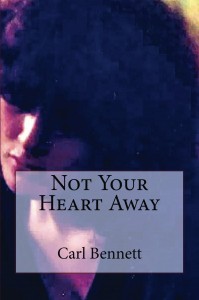
Not_Your_Heart_Away_Cover_for_Kindle


December 24, 2012 7:50 pm

This is a bit of a long-shot, but would you happen to be the Wendy Hales who was married in Bradford-on-Avon in 1995, who was Wendy Buckingham before that?

Happy Christmas in any case, but if you are Wendy it would be superb to get in touch. For me, anyway!


February 12, 2013 9:50 pm
Hello, you may be totally the wrong person, but I’m very curious! Sorry to bother you, but if this is you in the picture (a) that’s not me and (b) hope you’re well and happy.

I’ve often wondered about Wendy Buckingham over the years. She was married in 1995 to someone called John Hales and there is no trace I can find in the UK. Someone suggested I looked on Facebook and there was/is only one Wendy Hales there. With other friends called Buckingham and a friend from the town where she was married. I only found that out last week. I’m really not a creepy stalker, honestly!

Wendy inspired me to write a book. I used an old photo for the cover. If you actually are Wendy I will use a different photo if you prefer, but she was really rather lovely. I hope that shows in the book. I think it does.

Rather rambling. Sorry. Just not sure if I’m talking to the right person or not. Happy New Year, anyway. I still think of her, wherever she is.

June 17, 2013 6:42 pm

Hello, I’ve tried to message you on Facebook. I wrote a few days ago. If you’re Wendy Buckingham, or used to be, I mean, I’m just trying to say how are you, hope you’re well, I hope the years have been kind. I rang at the weekend, but I don’t know if it was you or wrong number – I’ve only just worked out you got married – not the world’s quickest detective! Seriously, hope you’re doing brilliantly. It would be great to say hi. Friend me on Facebook or something! 


September 24, 2013 3:15 am

Ok. I’m in your ‘others’ folder. Obviously it’s late. Obviously drink has been taken. I just wanted to say hi. That’s really all. I hope you’re well and happy. You obsessed me for years. In some ways you always will, as an idea, as an ideal. I don’t know if that’s love, probably it’s not, but I never meant any harm. If you remember me at all you know that. You were a magical vision of perfect world, TV world. It’s only now that I realise you were in free fall, only after I wrote the book. I had to write it to see how things were. I don’t think I’m very sensitive. I wasn’t back then, the time it was about. I just looked at you as if you were something upon an altar. I wish I had looked on you as if you were a real girl then. I might have been more sensitive. I understand now how painful that period must have been for you, not as an expression, but as a real thing. I wish I had known. I wish I had not been so crass. My only excuse was I was 17 or 18. I am sorry. You took my heart away. I never really got it back. I wish I had really cared, I wish I had really loved, I wish I had really known. And if wishes were horses, beggars would ride.

I would love to talk to you. I really do understand why you might want to cut off from anything from that time. But I wasn’t your enemy. I was too young, too stupid, too overawed by you to do anything but worship without doing anything at all sensible or helpful if that was even possible back then, being the person I was. I found a diary from that time the other day, about the time your mother loaned me her car for the evening, for reasons that are still not clear to me, other than she knew I was ok with you.

Wend, it would be so good to talk to you. I don’t even know if people still call you that. I don’t know if you’ve read the book. If I definitely knew where to find you I’d post one. It’s on Amazon. It’s not a pornographic fantasy. It’s about a young man who cannot cope. Who was too much in love to actually love. About a feeling that would never leave someone, for reasons that they would only know decades later, that weren’t the reasons they thought they were. I want you to contact me for me. To do my heart good. To tell me that I didn’t do anything bad. I want to hear that your life has been good, or at least ok. That things worked out, or they might do. Just to hear you say ‘hi’ again. That’s all. It really is.

I know. Sad. Pathetic. Late at night. But sometimes late at night is the only real time things can be said. Be safe. Be happy. Say hello sometime. But above all, be you.


Me.

Share Button

Getting like a ghost town

"Then Sammy said if your Majesty hadn't spoken I'd have thought it was the horse! Top hole, what, Mary? Oh I say, I didn't mean, er.."
“Then Sammy said if your Majesty hadn’t spoken I’d have thought it was the horse! Top hole, what, Mary? Oh I say, I didn’t mean, er..”

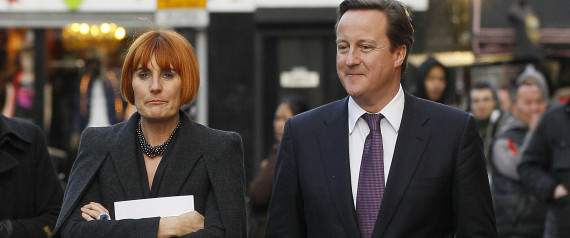
According to the BBC the number of High Street shops is falling. Again. Which is odd, because a few years ago the very earnest brand spanking new Prime Minister, David Cameron, thought he’d solved all of that by getting the rising media star Mary Portas to go and write a report on how to save if not the universe, then at least the heart of places like Trowbridge and Ipswich.

As someone who grew up in Trowbridge could have told you, what’s wrong with Trowbridge is easy to see. People don’t live in the centre, so at 5:30 its dead. The police force has been cut and what police there are drive around in cars, so after 5:30 you’re pretty much on your own. Not that the police there were ever much good in the first place. When I lived in the town there was a spate of garden gnome thefts. Miraculously almost all of the gnomes were found by the police but only because they were lined up on the police station wall one morning. And the pubs were crap. The Lamb wasn’t, because it had the Village Pump music gigs on Mondays (yes, as in the Village Pump folk festival, which wasn’t quite as big in those days, being mostly in the old stables out the back of the Lamb) and the Rose & Crown wasn’t, because it was walking distance from school and the landlord, back in those dear dead days, didn’t mind anyone drinking in there so long as they at least pretended to be a grown-up. Everybody knew about it. Nobody threw up or got stabbed or any other nonsense.

And there’s nowhere to park. Actually, there was a huge big carpark where the cattle and sheep market used to be, which was easier to use once the council got rid of the rusted brown metal pens that people sometimes drove into and wished they hadn’t. Something which can stand up to three or four tons of bullocks pushing against it for a hundred years didn’t have too many problems with a Ford Anglia. But the town got full, the carpark was replaced with a multi-storey and that got full as well and the shops that survived got bigger as the small shops shut their doors.

The supermarkets shut them. Something the Portas Report somehow didn’t feel it should mention. Bizzarely for a business report, it spent a lot of time saying what Mary Portas wanted, as if that was in some way relevant. Big squiggly signature. Big intro. Loads and loads of I think, I believe, I say. My challenge. My struggle.

My camp, Mary could almost have written if she’d been male, because when she wasn’t gurning on TV as a retail consultant looking straight to camera like Anne Robinson after an experimental trip to the hairdresser she was spending most of her time telling everyone who would listen how she’d just come out and still got on with her husband uber super-woman stylee, although presumably not on him.

Read it here, if you like. It’s crap.

“My review has shown me…” Wow, well thanks Mary. I somehow had the idea that all that public money you got for doing it was to show ME, but that shows how little I know what things are about.

“An increasing number of shops are falling by the wayside as they fail to meet the expectations of today’s increasingly experienced time-poor, experience-rich consumer.”

Well I never. I won’t say that the wayside metaphor is probably the most stupid cliche I’ve seen if you’re writing about a High Street, because it just is anyway. But what does the rest of it even mean? What kind of experience are we talking about? Silk ropes on the bedstead? And why two ‘experience’s in the same sentence? How were people fifty years ago poorer in their experiences? Because they didn’t have a TV show, a packet of ginger hair dye and a producer? Apart from the fact it’s vacuous inane borderline-illiterate regurgitated irrelevant crap in the first place?

“We’ve seen the closure of brands.”

Have we Mary? How do you close a brand, exactly? “There’s a wealth of knowledge which describes them.” Is there? Is that what knowledge does? “Much of what we do know is stored in professional silos.” At least I’ve seen one of those. It’s over near Wickham Market, in the grounds of the old school that the big farm took over to store their machinery. About sixty feet tall and bright silver. I think they store grain in it or something like that. As well as old copies of the Portas Report, presumably. They probably need something for the rats to nest in.

Mary Portas spent her entire non-TV career making the High Street the way it is. That could be why her report spent its first few pages saying it wasn’t about blame and we are where we are and it wasn’t really anyone’s fault if the High Street was all big crappy shops selling all the same stuff, except maybe the small shops who couldn’t afford to be there, the losers, given she’d made quite a lot of money turning it into that.

So what was Mary’s solution? £100,000, to be given to six “Portas towns.” Each, obviously. Wouldn’t want to give the impression that this was in any way a token amount that wouldn’t change anything. Why, for that sort of money you could probably get what, six, maybe even ten extra carpark spaces, provided you didn’t have to buy any land to put them on and you could just move some curbstones and paint some lines. And stick a meter in, obviously. Oh and a big sign about it all.

“What really worries me is that the big supermarkets
don’t just sell food anymore, but all manner of things
that people used to buy on the high street.” Portas Review p11 col 2.

Excuse me. Just what exactly is this crap? Why is it of even the most passing interest to me, or the government, what worries Mary Portas? Did she just get someone to type up her diary or something? “All manner of things? And there’s a capital H on High and a capital S on Street, while I’m here.

But basically, so what? Who cares? Lord Sainsbury doesn’t. There isn’t a Lord Tesco yet and if they don’t reach a bit deeper there won’t be, either. Most of the people who go to the shops don’t, so long as they think someone else should pay for their convenience, whether that’s Tesco building a big car park or Apple using child labour tucked up out of sight in China.

It’s a gimmick. The answers are obvious and nobody cares. Or rather, they say they do but if it comes to the choice of piling factory food in the back of the car or walking to the shop every day then they don’t, at all. And we can all go on pretending that car insurance and parking and congestion and pollution and children with asthma and road deaths and local council rates and every single road having yellow lines on it and places like Ipswich where if the council had any sense, given what they’re offering they’d pay you to park there, not the other way around, all of that’s convenience shopping.

There you go, Mary. Maybe you’ll be back on TV soon, to tell us all how your report’s doing. We really care what you think about things. Almost as much as you did in the Portas Review.

Let’s see anyone bothered by that. Until then, there’s probably something on TV about it. Oddly, after that stellar performance it’s not by Mary Portas this season.

Share Button

Dawn patrol

In a further development, the monitoring group Syrian Observatory for Human Rights reported that Isil had been able to fly three Russian fighter jets captured from the regime. Though they have not been used in operations, the Observatory said the MiG jets were being flown with the help of defected Iraqi air force officers.

MIGJust before dawn the three chums wandered out to the sheds where the fitters had been labouring through the night. Mohammed reached into the unfamiliar pocket of his flight suit, rummaging through the invisible folds of his traditional robes forgetting that he no longer wore them as they got really flappy in the cockpit at 700 knots.

“Smoke?” He held out the packet of Players to Mohammed and Mohammed.

“Actually old man, best not. Mohammed, you know.”

“Drat this,” Mohammed ejaculated tensely.

“Steady on, old man,’ Mohammed interjected judiciously. “If the CO hears you carry on like that he’ll think you’ve got a case of blue funk.”

Mohammed held his gaze steadily, his brown eyes hardening.

“Blue funk. We have three 40 year old MiG fighters, based on a design that’s 60 years old or I’m a Chinaman. Three.”

“Mohammed old man….” Mohammed exclaimed. “Not in front of the chaps!” He nodded his head towards the fitters still labouring in the sheds. One of them started to whistle a popular tune before his comrades told him to stop promoting decadent Western imperialism. Sheepishly the overalled figure assayed a few bars of “Like A Virgin,” but his attempt at reconciliation fell on stony ground.

“Do you know what each one cost? Well do you?” Fl.Lt Mohammed spat furiously. “$185,000. I went online and saw the advert.

“Allah is merciful, Mohammed old man,” Squadron Leader Mohammed reassured Mohammed.

“Allah might be, but the Allied Re-Engagement Strike Enhancement Force (Air Recon) Command Exercise…”

“A.R.S.E.F.A.R.C.E., old man. Acronyms. Don’t want the chaps hearing things. Need to know,’ rumbled the squadron leader.

“A.R.S.E.F.A.R.C.E. then – isn’t. Our three MiGs go up against fifty brand new Mach 2 fighters guided straight to us by their AWACS and the entire Mediterranean U.S. littoral support capability the second we pull the stick back. If we ever flew against them seriously we’d be coming down Harry Prangers before we’d even got the wheels up. And that’s just the bally advance force in the area.”

“Flight Lieutenant Mohammed! That is enough!” The squadron leader’s tone was icy. “Chaps in the ISIS air force don’t come out with that kind of tommy rot.”

“Fl. Lt. Mohammed didn’t mean it sir,” Wing Commander Mohammed interceded. “It was just banter. He’s flown too many missions lately.”

“He’s flown no more than every other pilot in the ISIL airforce. Either of us,” growled the squadron leader. “It’s like the Battle of Britain. If a chap hasn’t the stomach for it we’ll soon see who has.”

The lieutenant steeled himself. “It’s not though sir, is it?” He rushed on, before his nerve finally failed him. “It’s not like the Battle of Britain. Or even the Battle of Baghdad.”

“No popsies, for a start. No piling ten chaps into a Lagonda and singing “We’ll walk together down a Syrian lane” on the way to the Red Lion. No Red Lion. It’s haram. And not with only three of us in the airforce. No cheeking the unarmed local bobby about closing time, because there’s never opening time. No fourteen pints and get rid of the hangover by snorting pure oxygen from your high altitude mask, because there’s no such thing as fourteen pints, or even one. Just the overwhelming odds. It’s nothing like a Biggles book. Nothing, I tell you. Except for the lemonade W.E. Johns had to put in the books instead of the whisky in the original stories he wrote just after the First War he served in, when Hamlyn started selling them to children in the 1930s. Sir,” he added lamely.

The lieutenant stood disconsolately, his resolution fading as his lip trembled before the Wing Co’s growing fury. Somehow he steeled himself for one last supreme effort.

“Even the only beheading we had around here was when Leading Aircraftman Mohammed pulled that ejector seat handle in the hanger without checking the safety pin was in place.”

A heavy silence hung over the entire ISIS airforce as the three men stood freshly bearded on the tarmac, not smoking, entirely un-hungover, limbs not loosened in a post-coital glow as they didn’t remember the two WAAFS and Flossie the barmaid from the Bunch of Grapes in Carshalton. Each man’s ears twitched for the sound of the Allied cruise missiles screaming across the field. It was going to be a short air war.

Share Button

It’s what I feel

I think I’m not going to listen to Radio4 any more. Not news or current affairs, anyway. Saturday morning and I’m eating half a pink grapefruit while I wait for the mushroom & parmesan omelette to transform itself magically from stuff in a pan to yum and there’s a piece on living standards. Someone else has written a report about the British economy, such as it is. The report says it’s basically shagged, that consumers, in the new parlance ‘people at the bottom’ have seen their wages decline in real terms, meaning that they might have had a pay rise but things cost more so they’ve actually got less.

Even before the substance of the report you notice how the discussion has changed. Ordinary people who buy things in shops are now called ‘people at the bottom.’ Which obviously implies there are people at the top. So what do they buy? Do they go to Waitrose instead of Asda? Maybe. They probably send someone to do it for them though. Do they buy two jars of marmalade instead of one? No, but they probably don’t get the Asda value one for 49p. When they want a new pair of shoes, do they buy four hundred pairs instead of one, given that they earn four hundred times as much? Er, well, actually…..

Obviously, even the most infantile trickle down supporter wouldn’t claim this is what happened, even though that’s the basis of the entire post 1980’s economy – if the rich get more they’ll give it to other people, because it’s a well-known economic fact that rich people got rich by spending lots of money.

Except it isn’t but never mind. We don’t do facts anymore, as the two experts on Radio Four proved. Why is all this happening? It’s yer immigrants, innit, said one.

It would have been nicer if that’s what he actually said, but he used a voice like mine and we don’t speak or sound like that. We speak clearly and authoritatively and quite often people listen to what we say, because what we say sounds like the truth. The snag is it’s just our voices. That’s what they’re like. Sometimes they make people believe things that just aren’t true and do things they don’t want to do, because they think they have to. But it’s just our voices. That’s how it works. Ask any Springer spaniel.

The other expert politely told him that what he was saying was bollocks, but she made a basic error in bothering to be polite instead of simply telling him not to talk shit. She asked him for any evidence that what he said was true, that the massively growing inequality between ‘people at the top’ and everyone else was down to immigrants.

Which was where she lost, as she should have known she would because we don’t do facts any more. He didn’t have any evidence, he said. But he felt that was true. Game over.

Exactly like Blair and Iraq, exactly like Brown and any statistics, exactly like Ian Duncan Smith and his ideas about the feckless, fraudulent, workshy poor, or ‘anybody on benefits’ to use the current shorthand, we don’t do facts any more. We do feelings. Apparently all you have to do now is feel something is true and because we’re all so sensitive and perceptive and mindful these days, it’s sacrilege to contradict them. Feelings are sacred. If anyone even attempts to say your feelings are in total contradiction of facts they simply aren’t going to be invited back on the programme. Like the Greens. Who needs them and their facts on the radio every morning?

Rude, you see. Very, very rude. Don’t know how to behave in public. Lunatic fringe. If they want to behave like that then there’s Speakers Corner every Sunday. Real people, the kind we want telling us all what to do, they feel things. And that’s much more important than knowing anything real. I blame the immigrants, meself.

Share Button

The Bird In Hand & The Green Dragon

I don’t know why dragons are green, although the fact that they’re named green suggests that there must be other colours too, such as the red one and the black dragon that are supposed to have had a fight on the border of Essex and Suffolk, long ago. Assuming there are dragons.

Whether or not there are or were, a policeman used to ask my grandmother for a green dragon, back when she used to run a pub in rural Somerset. The Bird in Hand was in Nailsea, on the edge of the moors and when she was a girl, before the moors were drained, it was about as remote in winter when the sea came in as it had been in King Arthur’s time, or when Joseph of Arimathea brought the Holy Grail to Glastonbury. Every few months a policeman on a motorcycle used to turn up, usually when the pub was closed and this was a time when pubs shut in the afternoon and at eleven o’clock at night, on the dot, if you didn’t want to lose your licence to sell alcohol.

A Mr Polly world, where the pub was central to the community, or at least the section of the community that had two pints a night every day on their way back from work, the men who worked with their hands in the village, the kind who got thirsty of a night. There were other reasons to drink in pubs in those days too, other than just liking beer. Beer at least made sure you wouldn’t be poisoned by the water you drank out of the pump, and a lot of houses big and small still had pumped water then. It also gave you an excuse to be out of the house, at a time when contraception was a joke or a dirty secret. My grandmother was one of eight children. She had nine. Maybe she should have gone out a bit more herself.

She never knew what it was the motorcycle policeman wanted. He visited for years. I have an idea but it seems unlikely. There never was a beer called Green Dragon. The wood floored beer smelling long bar of the Bird In Hand, where my grandmother’s favourite customer service toolkit included a bull’s penis stuffed with lead shot, applied behind the ear to gobby customers when they turned away, didn’t lend itself easily to anyone’s idea of a cocktail bar, either.

But absinthe …. maybe that’s what the policeman was after. It was illegal. I remember when it stopped being illegal, probably, and an advertising agency party where the bottle was considered almost as illicit as the coke someone lined up on the cheeseboard. Absinthe that Toulouse Luatrec liked, a little taste of la vie en rose wafted in to deepest Somerset. It hardly seems more likely, somehow, that anyone would go looking for it in Nailsea, never notably a hotbed of artistic bohemian endeavour.

The pub shut long ago. The forge was demolished and my grandmother dead more than twenty years back, so I’ll never know what she thought the policeman wanted. I have my own idea exactly what it was.

Share Button

Starting late

I did a thing people have told me to do for years. I went to the doctor and asked to be referred for and that’s the problem.

I don’t know what. You walk in. You don’t know where to start or what to say. I’ve got, I’ve been told, a warm, nice, calm voice. The kind of voice girls like. I speak clearly. I used to have the most awful Sloane bray and if I can’t hear and I’ve been drinking, I still do, but the doctor’s surgery was quiet and and I haven’t had a drink today. I’m going to when I’ve finished writing this.

I sat down. I watched the doctor getting impatient. I could see her face clouding. So I told her I’d been abused as a child. She thought I meant sexually, but I don’t think I was. Physically and mentally. As Meatloaf used to sing, out of three ain’t bad, doc. Two out of three ain’t bad.

My father was a bigamist. Probably. He was definitely a professional liar. He pretended he’d been born in Australia, but he wasn’t. I found out by going to get a copy of his birth certificate. He’d removed it and mine and my sister’s and my other sister’s and every other piece of official paper in the house when he finally left, but for most of my childhood he was hardly ever there, just two or three times a week as I remember it. We went on holiday a couple of times, and he had to do bizarre things on his own, like going to visit a church to see the special window dedicated to the RAF, which he claimed he was in as well. He never, ever went near a church in all the time I knew him, so I’m presuming this story, like every other story he came up with was pure horseshit. He was probably phoning his other family, the one he ran at the same time.


Share Button

Trashing the NHS

The nurses are on strike today. In the usual way that people speak to very small children the government has told them they can have a 1% pay rise or something else but not both because Mummy and Daddy can’t afford it.

So far as I’ve seen, nobody in government, the press or officially, the health unions has stood up and called this the utter horseshit that it is, that if a government can increase ‘the deficit’ and call it reducing it and at the same time commit to an endless war against abstract nouns when it doesn’t even know who’s on which side, assuming there even are any sides, then clearly it can afford anything it wants to.

But that’s unsayable. As Goering pointed out at his inevitably-decided trial at Nuremburg, the kind we should have had in 1997 except we didn’t know then we’d just voted in the same thing but with more hand-movements and a smile, it’s easy to get people on side with the idea of a war they don’t want. You just call them traitors if they say anything against it and tell them the enemy (anybody, it’s never really mattered, take your pick) wants to rape their dog and take away their iPad so they can’t watch X-Factor. Or the contemporary equivalent. And it always works, because it takes a bit of an effort to find out the truth and dogs and iPads don’t pay for themselves and there’s stuff to do.

Another truth that is a bit hard to find out because the media themselves are a bit too busy to mention it is that there will never be an NHS privatisation bill. There doesn’t need to be. It’s already been done.

For the last six months I’ve been working for the NHS, at a mental health Foundation Trust. It was supposed to provide services to two large rural counties to help people in fragile and damaging states of mind. Effectively now, it can’t, by design.

The first project I worked on was to provide a drug and alcohol service for around one and a half million people. We calculated what it was going to cost to provide it, working on the NHS overhead figures which usually come in between 20% and 25%. It pays for things like training, pensions, and all the expenses you can’t get rid of, such as the maintenance of buildings that have had to be shut almost as soon as they were opened, because there isn’t the money to run them. I can show you two, boarded up and unused as one of them has been since the last brick was laid. The maintenance building is closed now as well, so anything that needs doing won’t be done by the NHS and will have to go out to tender.

We thought somebody like SERCO would bid for the Drug & Alcohol work, along with other NHS Trusts from other areas. We thought SERCO would put in a bid at about 70% of our own NHS bid, because SERCO can afford to do that, operating on an overhead margin of 6%. Of course, SERCO don’t have to pay for training, or full-time staff and quite often deliberately underbid to get the work, as they did when they provided GP cover in Cornwall, where SERCO felt one GP was enough to cover the entire county some nights, and if that wasn’t really quite enough they’d falsify the records to make it unhappen anyway. Which is why SERCO is facing multiple different counts of criminal fraud. Which is not why SERCO is barred from pitching for any further NHS work, because it isn’t. This behaviour is entirely acceptable and in no way will or even can count against any further bids SERCO put in. Because that’s the system you voted for, especially if you didn’t vote.

None of it mattered anyway, because when we got the official budget from the county council which has the statutory duty to provide these services and can’t, so they contract them out to the NHS or anyone else who fancies a go, the money available was just over half the amount the NHS thought would be needed to do the job. So the NHS didn’t bid, because it couldn’t do the job for that money. Someone who thinks they can will be doing it instead. The NHS budget Cameron was talking about wasn’t even relevant. Any journalist could have found that out, if they’d wanted to. They just didn’t want to. This was County Council money. This is how it works.

Obviously, whoever gets the contract won’t be providing training or pensions or standard terms of employment or company cars or even minibusses to get staff from one end of a poorly served hump of land jutting out into the North Sea with hardly any trains and busses about as rare as a Labour voter around here. Because the NHS is safe in the Conservatives hands. They’ll take good care of it. So that when the last service the NHS currently does is put out to tender, when more staff have left, when the last bid can’t even be pitched for because it simply can’t be done for the money the local authority thinks is a perfectly reasonable amount, all that lovely prime development land on the edge of the town can be sold, mature trees, bus stop and all mains services connected.

Buyers are advised to carry out their own surveys and advertised services may not actually work, obviously. But that’s not really the point, is it? Nobody’s interested in how the NHS operates or what works and what doesn’t. You shouldn’t even be asking questions about it. Can’t you see the enemy are making you think that way? What are you, some kind of ISIS apologist?


Share Button

NHS – a breach of trust

Contract by contract, one reorganisation at a time, the NHS is being rearranged so that it can’t really do anything that would warrant the word ‘national’ in the title. Where I work, in a mental health foundation, services are split not just between two counties but into different parts within the same county. The level of service is not the same.

A lot of the time services have to be outsourced to external organisations, ‘third sector’ charities using sometimes untrained staff on lower wages as well as the SERCO/G4S end of the commercial spectrum who can also spectacularly undercut NHS bids for contracts by using minimum wage staff on zero hours contracts. SERCO has an operating profit target of 6% instead of the NHS’s 20% to 25%. The NHS profit goes on training. SERCO get the trained staff free, inherited from the NHS until they leave.

Everything has to be tendered. If you want ambulances the NHS ambulance service has to bid for the work. If you want community services, or a drug and alcohol treatment service, that has to go out to tender as well. The fact that the services my hospital can offer have been pared to the minimum and each NHS Trust has to compete against other N HS Trusts makes it easy to pick off the contracts one by one, leading to more closures and cuts as there are fewer and fewer NHS patients to cater for. There are more patients, or service users as they’re supposed to be called, overall, but not for the NHS. SERCO et al got those. You don’t see this on the news for the same reason there will be no massive NHS Privatisation Act; it’s already being done, without fanfare and so far as I can see, without any media paying much attention at all. Or maybe they know all about it and think as it’s the government doing it then it must be a good thing.

I think of it as a breach of trust. The NHS was not set up to work like this, which is why it doesn’t work like this and this is being done deliberately, to “prove” it doesn’t work and justify the cheery picking break-up of services so that the NHS is left with the difficult and expensive things to do and everything else can be jobbed off to the cheapest bid.

The easy things, for example. But private contractors breach trust even with these. My hospital jobbed off its wages administration to a private contractor for the usual reasons: it was supposed to be done better and cheaper and more competitively, because everyone knows that private contractors work that way and nationalised industries don’t. It’s gospel, since 1979 and you won’t find many MPs in any party who say otherwise.

Quite why that means everybody at my hospital has to chase their wages almost every month isn’t clear. People only go to work for somebody else in the expectation they get paid. Otherwise they might as well work for themselves. So when wages aren’t paid on time, when you have to phone up to ask when you’ll get the money for the job you’ve done, when you’ve learned there’s never, ever any point in asking why your wages haven’t been paid because there’s never any reason that you’re going to be told other than ‘we felt like getting some more interest on the money in our account instead of paying it out to people like you,’  or ‘you know all that stuff about how we’re more effciient? That was just crap we said to get the business,” and you certainly won’t be told either of those things, at least one of which is true by definition at any given time, the privatisation work is petty much done. Hardly anybody wants to work there. Simple because it takes more to build trust than simply putting it in your name. Obviously the new chairman is looking into this as a matter of urgency. I wonder if he’s paid on time?


Share Button

The complete Will Self DIY kit

Want to be rich and famous but you’re afraid of looking needy and greedy? Want to do that reassuring fireside chats thing, be cool and so smokiiiiin’ that your shorts burst into flame, all at the same time?

You too can be a famous Cuddly-Dissolute™ journalist/Have I Got News For You guest, go-to drugs authority/working journo me dear star. Just follow these ten golden rules and you too can get a little byline with a picture that looks as if it captures that nanosecond when you realise there was a wasp on that ice lolly you just bit into.

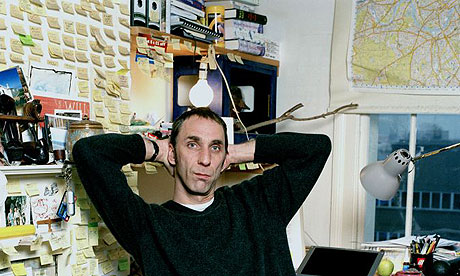
will selfHow To Write the Complete DIY Will Self Article:

1) Put a dateline in. It’s like journos used to do. Older means authoritative.

2) But you don’t want to seem too old, so put the mandatory drugs reference in the first paragraph. That makes you down widda kidz innit.

3) Do be careful with drugs. You don’t want people thinking you just wanted to get off your face like some loser in a council flat so make sure that drugs reference is an acronym of some kind. MDMA = good. Draw = I’m sorry, but you can’t put that in a respectable Will Self story.

4) Irony call – get this in early too, you don’t want people to think you actually LIKE the quite nice sounding place you’ve ended up reporting from, unless you can make it look as if you’re only liking it ironically. When you write, use words that sound as if your mouth is tight and turned down and that’ll be about right.

5) Synapses. They can fire, miss, implode, spurt, scream, anything you want them to do, but it is absolutely imperative to get them in there somehow, just to make sure people don’t think (3) or that you are or were some trash junky mess-up instead of a hip gunslinger way out there on the frontier, a sort of British Hunter Thompson, if Hunter Thompson had lived in Swindon, worked on the Wiltshire Times and hired a moped.

6) Key words and phrases to include: dickhead; capitalism’s blitzkrieg; millennium, moronic, at least one other highly specific drug reference, something about the 1980s, Comrade Stalin, hip, zeitgeist, unalloyed genius and at least one ‘high-culture’ icon, like Michaelangelo for example. Dante would do at a pinch.

7) Make sure if you do write ‘high-culture’ you put it in ironic inverted commas so that people know you know it is. Otherwise, no sorry, the thought alone is too hideous.

8) Get a pretendy swearword in towards the end, e.g. Hell. It keeps them reading. And you look hip as Hell. Also you’re obviously being ironic in using the word, so doubleplusgood.

9) Use doubleplusgood and/or Nadsat droogspeak if you can, but make sure they know you’re being ironic. Again.

10) The Faux-Humble Fake Letter From America. “And in the end” is a good way of rounding it off, especially as it’s got ‘in the end’ in, making it circular and oh look, ironic.

You’ll make a fortune. Just as soon as Will Self ironically shuffles off his mortal coil, comrade.

Share Button

High on a hill

There is a green hill far away. We sang about it in Sunday school, but it’s more true now then when I first sang it, back where all the hills were green and not far away at all, just a cycle ride away.

I wrote this today about something over a year ago. I don’t know if it works or not. I thought it did when I wrote it.

This is the place I grew up, the place I'm from, this land of green hills far away. But somehow, very close to me all the time.
This is the place I grew up, the place I’m from, this land of green hills far away. But somehow very close to me all the time.

High On a Green Hill


I met her in a pub when we were younger

Half our lives away; I met her on Facebook when she was ill.

I gave her a book of mine to read, while she lay

Under a blanket in the chill of an Andalucian winter,

Thick patterned wool around her thin shoulders,

Cold tiles under her long feet. She had a plan

To start a marmalade factory but something happened

To the farmers collective or the orange crop,

I didn’t really know.

And then there was the husband

And then there was the son and it was complicated,

You know how it goes sometimes.

I thought of her all that winter, pale and cold

Her light burning lower.

You can die when you’re our age.

Or anytime, it’s just we know that now.

She had pneumonia, she had blood tests,

She thought she had something else and

We shared the great day when she could walk in the sun

Three clicks to the village and rest and back again

On her own, by email, the way people do now.

After the marmalada corporation somehow didn’t happen

We met face-to-face the second time in our lives;

A university reunion.

She was the only reason I wanted to go.

She didn’t drink any more.

I was about ten years too late for that plan

But I didn’t know that when I offered her a glass of wine

And as she said “if I drink I have no limits,”

As I tried so hard to catch the waiter’s eye

For a whole bottle her friend kicked my leg under the table,

Hard and then harder until she said

“And this time I’ll probably die, so no,

I won’t have a drink. Thanks.”

She drank fizzy water.

Apparently there are different tastes,

Just not the ones I thought she meant.

We ate while I tried to hide the tinted sin of my glass

And talked and went quite early to our separate rooms.

When someone doesn’t drink, what else do you do?

But in the morning, fresh, we walked through sacred damp Bath

To the café I’d found that I thought she might like.

And she did. And I did, when the waitress assumed

She was my wife. It felt like it could have gone that way,

In a different life. After breakfast we walked along the canal,

Early Spring and suddenly it’s May and maybe,

Just maybe everything would turn out ok and

After she told me where she’d been and I didn’t need

Or even want to top her stories and win,

Because just walking there with her,

It felt as if I had for once,

As if I’d already won,

Although what that was

I didn’t really know.

She played electric bass and me, I played

A bit of guitar and sax.

Our first gig was outside the city, later.

I thought I’d need to drink but somehow I didn’t.

In the shadow of a church up there on the hill,

In the mist outside the pub door.

I didn’t finish my drink, blowing warm

If not hot and maybe close to cool.

She was taking a taxi to the airport at four.

After we’d all judged the gig a total success

And packed away our rocknroll music stands,

Our funky bifocal reading glasses,

She zipped her Hofner into its flight case

As I said don’t call it, I’ll drive you there

And she said ok. We both knew

It wasn’t really the right direction

But part of her wanted to stay.

A little bit. Just a little bit.

We bought factory-made hummus

Second-hand in a Sunday supermarket,

Some grapes and bread on its sell-by date,

Flavoured water I’d never drunk,

Something with a hint of lime and ate

Parked on a grass verge in my car,

High on a green hill in the sluicing rain,

Next to a stone barn grey against the black sky,

The food unimportant until it was time

For her to catch her plane, nearly,

Or anyway drive her to the airport.

We parked again and haggled again

Over petrol money I didn’t want from her,

Paid the car park, carried her bags

Then watched her smoke a cigarette outside.

Before we hung around Departures

Until it really was time for her to go.

We’ll do it again some time.

All of us, maybe. Sooner than before

We’ll be high on a green hill again.

Share Button
Follow on Feedly