Street of Self-Importance; Or How I Hijacked My Daughter’s Death To Look Down Wid Da Kidz

Fleet Street used to be called the Street of Shame, presumably because a lot of stories were written and/or made-up when the writers were drunk a spokesman said, which used to be an automatic flag for “I totally made that up,” as everyone always knew.

For me, I lost trust in what I hate to call MSM – Mainstream Media – last Bonfire Night. I know that sounds a bit like The Night I Found Out About Santa. But it was. There was a huge demonstration in Westminster, outside the Houses of Parliamment. It was a wholly peaceful demo. But while Twitter and Facebook knew about it from people who were there, it was totally invisible to the BBC. So much so that for over four hours there wasn’t a single mention of it on any BBC website. There are obvious news priorities. There’s a finite amount of print space or website or attention span and an almost infinite amount of news. But it seemed distinctly odd that the BBC had the time and space to drear on about the traditional Bonfire in Lewes but no space at all to even mention 5,000 people outside Parliament. And then Russel Brand turned up.

I don’t like Russel Brand. I confuse him with Russel Grant. I think he has an extremely silly voice. I’m sure neither of those things bother him in the slightest. But what bothered me was the BBC’s capacity to ignore something that demonstrably was important, the Million Mask March, something that was happening in major cities all over the world, and try to divert attention from it, deliberately.
darvall

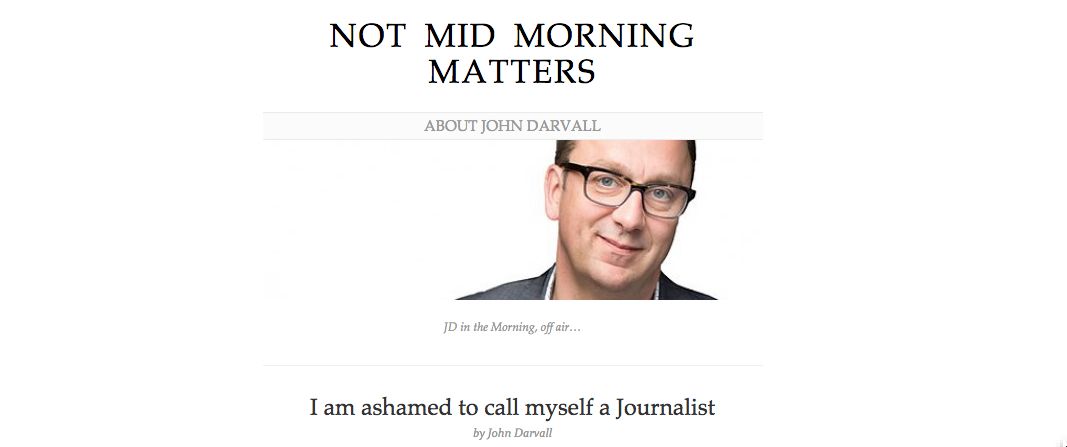
Then today I read about a journalist saying that he was ashamed to be a journalist. You can read the original article here. I thought it was going to be atonement for things like that. A cry for forgiveness, from a profession that decided that it was ok to write down that the Prime Minister threatened BBC journalists in public that if they didn’t toe the line he’d shut the BBC, but it was only ok to write about it after the election, in case it annoyed the Prime Minister. Or maybe, in case his behaviour was so outrageous that he would have lost the election if people knew that the public service broadcaster had been treated like this.

But I was wrong. John Darvall was outraged because other journalists told the truth. Or if they didn’t he doesn’t say what it was they made-up. His daughter was killed in a car crash. He made up a tribute to her, as anyone might, then attributed it to her mother. Which was not true. She might have thought those things about her daughter. She probably did. But she didn’t say them. John Darvall did. Then he pretended someone else did and wanted other journalists to repeat this fiction. His daughter had lived with her mother and step-father since she was three. His daughter and her mother and John Darvall and the step-father didn’t use that word, but that was the fact of it. Cosy sophistry of the order of “I am Polly and Oliver’s father, Simon is their dad” may be fine around the kitchen table and doubtless it was, but it isn’t all that clear when you’re trying to tie things up in 150 words in the Western Evening Press or wherever.

That may well be “always the language we use,” but it isn’t strictly true. Whoever Simon is, he was the poor girl’s stepfather. He and she may not have thought of him as such, nor used the word, but that is what he was. Language really is vital if as the 1,000 words of self-indulgence claims, “we are to understand who we are and what we do. ”

What ‘we’ chiefly do in this case is get irritated because other journalists tell the truth using a word you don’t approve of and write copy for other papers that you think is badly written. John Darvall repeatedly says that untruths were said, but somehow forgets to mention any of them. Not one, in fact. What gets most attention is that other journalists described his ex’s partner as his daughter’s step-father, which he was. And that the step-father, after he’d heard John Darvall on the phone, rang him up later and gave him a bollocking about what other people said.

I don’t know John Darvall. I don’t know anyone involved in this story. I can fully understand why people lash out and say unreasonable things when they’re upset, especially when they have something as serious as sudden death to be upset about. But being ashamed to be a journalist because other journalists use a factual descriptor and you don’t like it, and your ex’s bloke rings you up and goes on at you isn’t anything to do with anyone else. It’s piggy-backing his own daughter’s death to look right-on.

The gist of the problem, the thing that sticks most in John Darvall’s craw, apparently it is ‘they’ said his ex’s partner was the dead daughter’s step-father. Well, he was. Deal with it. It’s not something to be ashamed of. And it’s not as if journalism needs to look far for things to be ashamed of. There are, after all, more shameful things than using truthful words that people don’t like. Except as the journalists on Cameron’s airplane decided, maybe there aren’t.



Share Button

Making It Up

Tweedledum or Tweedledee, or possibly both, once said to Alice that words meant anything he (or they) wanted them to mean, neither more nor less. As a descriptor for modern media it’s horribly accurate. Words that mean one thing one year mean the opposite the next. War is peace, as Orwell pointed out a long time ago.

Ever get the feeling you've been conned?
Ever get the feeling you’ve been conned?

All three might have been mildly amused by a man having a heart attack this week. Strictly, that wasn’t the nub of the story, although it seemed to be at first glance. After the driver had the heart attack the vehicle drove on and literally into Terminal 5 at Heathrow.  Yesterday.

My father had a fatal heart attack and carried on after death much as he’d lived, being an expensive nuisance to other people causing a mess everyone else was expected to sort out and crashing into three cars. I don’t know whether this driver survived. But two things stood out immediately.

First, there was huge debate over whether the man should be called a taxi driver. It used to mean a black cab driver who had done the Knowledge and had a proper licence from the Hackney Carriage Office dahn the end of Chapel Market where Sammy Fox’s granny shopped, left then right then there guv, you won’t mind if I drop you here because I can’t get back otherwise what with the traffic and that, I was going down Kings Cross anyway but not this time of the afternoon living out in Essex south of the river nah, I’m not going that way this time of night. I had that Jeremy Clarkson in the back of my cab last week, very clever man. And all that STUFF.

No For Hire sign. No proper cab. So he was a mini-cab, like the dreaded Uber, which seems to be shorthand for the kind of no-insurance but gee-it’s got-a cute-app-plus-its-cheap which is shredding the black cab business, so long as you don’t mind nobody knowing where they’re going and legging it if there’s a traffic accident.

Rather more significant I thought was the fact that the picture showed so many lies we’ve all been told. Back in 2007 two men attempted to massacre people in the main concourse at Glasgow airport by driving a car into it and detonating gas bottles there. No, the big ones. The attack failed, not least because an airport baggage handler headbutted one of the attackers who was already on fire. After that we were told over and over again that airport security blah paramount importance- lessons-will -be -learned – best practice – watchful – security – terrorism – CCTV – vigilance and all the customary words that clearly mean nothing at all.

Because terrorism

Why do I say this? Why do I doubt that when I have to hold my trousers up at airports with my hands like someone on Death Row because my belt has to be interrogated because Terrorism, that this isn’t just a stupid charade that does less than nothing to stop terrorism? Becuase of the picture at the top.

If you go to Edinburgh airport you can get a car near the concourse. There are metal barriers stopping you repeating the attack at Glasgow. There are concrete bollards protecting the main doors, so you definitely can’t drive a car in there, whether you get head-butted or not. At Heathrow T5, obviously none of that matters. This taxi, mini-cab, VW microbus, call it what you like, stopped only because the driver’s foot came off the accelerator. As you can see clearly, it went straight through the puny designed-to-stop-people-only metal railings that were the front-line defence against a car being used to smash straight through the windows onto the concourse. As this vehicle nearly did.

Public response to this? Nothing? Security implications debated all over the media? No. Social media backlash? Well actually yes. I was told this was ‘nothing to do with terrorism’ and I was ‘stupid’ to mention it by someone on Facebook. So that seems to be official. Fifteen years of ‘security’ which has been nothing more than legalised theft of alcohol and perfume bottles over 150 ml at every airport where the G4S personnel don’t fancy doing their own Christmas shopping and the net result is that anybody with access to a car can still stage their own carbon copy of a terrorist attack mounted seven years ago. It isn’t just that it doesn’t matter. That matters in itself. What matters more to me is that nobody is even supposed to notice, or to mention it if they have.


Share Button

Janni Schenck

About 17 years ago, 18 maybe, I walked into an almost empty pub where an old man and a fat skinhead were arguing, one summer’s afternoon. The words Hitler Youth were used, which even if it was Hertfordshire, isn’t the norm. That’s when it really kicked off. The old man was incandescent with rage.

HitlerYouthKnifeYes, he said, he’d been in the Hitler Youth. He was proud of it. What he was outraged about was being called a Nazi.

Like most people, I believed what I’d been told, pretty much without thinking. There were Nazis and there were Germans but they probably all knew about everything and We were Good and They were Bad and they were all in it together and if they didn’t like Hitler they’d have done something about it… All the usual sloppy, stupid, simplistic thinking that I have no excuse for, as I have none for the childish bullshit I’ve been told.

We are Good. They are Bad.  Forever and ever, Amen. It never matters who they are, not least because Their leader is invariably mad. Hussein. Bonaparte. The Kaiser. The Junta. Obviously goes without saying, Hitler. Mad, all of them. The fact that Churchill was drinking more than a bottle of brandy every day has and had no bearing on anything, ever. Because We Are Good.

I listened to the old man explain that you didn’t get a choice about joining the Hitler Youth. You were conscripted on your thirteenth birthday. You got a uniform, a knife, you went to camp and slept in tents, you did singing and marching and bonfires and at thirteen, very little boy got to shoot real pistols and throw real grenades. I remember being thirteen. I can remember how complete I would have felt, as a boy, doing those things.

And I listened to the old man explain how on the last day of his war, in April 1945, with the Americans due to arrive within the hour, the SS arrived instead. They took all of the children up into a field and rummaged around in the dirt until they found what they were looking for, a hatch to a bunker full of brand new guns. They kitted the kids out with steel helmets and grenades and bullets and machine guns and told them to defend the Fatherland and oh look, is that time, love to help but must dash, maybe next time. Do your best boys. And drove off toward the future, leaving the boys to deal with the past.

They met their schoolmaster coming up the lane as they were taking their weapons back to the village. In the old man’s words, he beat the shit out of them, made them throw all the guns in the ditch and sent them home. He saved all of their lives. The Americans arrived on time, within the hour, riding jeeps with machine guns mounted on top. He said they looked as if they were wetting themselves. They would have shot everybody.

I never knew the old man’s name. He might be dead by now. If he isn’t perhaps one day he will see the thing I’ve been working on, the story of that day. It has other people’s stories in it as well, other real lives. A story of a man who made one silly joke and was going to be shot for it when the partisans attacked and he found himself walking 700 kilometres home to Bremen. A story about the Swing Kids, the Heinies, the Eidelweiss Pirates, Hans Falada, Sophie Scholl, all the other people our inane propaganda wants to airbrush out of our reality, because they don’t fit our children’s story: we are good. They are bad.

Life doesn’t work like that. When we lose the truth we cheat ourselves. So this is for Janni Schenck. I don’t know the old man’s name. I never did. But whenever I think about this story, that’s the name that comes to me, through 70 years of lies.

Goodnight Janni. I’ve told your story now.


Share Button

The Furmity Tent

I don’t know when people started hating food. I had a fantastic dinner yesterday, a fairly ordinary spag bol sauce albeit using venison mince and – gasp!! – a veggie stock-cube along with Worcestershire sauce, with furmity. I liked it so much that I said so on Facebook.

One person said they didn’t ever want to see such a thing again. Another told me to fuck off. The first one I blocked, not least because I don’t want anyone posting Our Brave Boys knee-jerk seasonal adulation on their time-line anywhere near mine. The second I know as a farmer and I know what she meant. Which is ok. Mostly.

What isn’t is people thinking that anything doesn’t come out of a packet is suspect. There is a distinct meme running through what passes for contemporary life that the only good food comes from a factory. At the same time that the number of TV programmes about food increases, so does the number of ready-meals and cook-at-home pizzas sold. Tabloids scream that if people used all the spices Jamie Oliver does it would cost a whole week’s JSA. Which if you used all of all of the herbs in his kitchen it undoubtedly would, but nobody would ever need to go and buy them all in one go anyway. The fact that every packet of processed food, the kind that directly leads to coronary heart disease, Type II diabetes and ADHD has a list of ingredients far more disturbing than a pinch of oregano and half a nutmeg, grated, is irrelevant. Since when did nutmeg buy any advertising space?

What was really surprising was the horror about furmity. As you remember from school, when you had to read Thomas Hardy and snore through The Mayor of Casterbridge, or watch it on TV one Sunday afternoon to be polite to your girlfriend’s parents before they went out for the evening and you could maybe listen to that new Santana album again but shut up until they’ve gone or they’ll hear you, furmity was what got Michael Henchard into trouble. It also made a success of him for the next twenty years, which isn’t bad going for some raisins. Admittedly, I’m biased. A friend once lived in Thomas Hardy’s sister’s schoolhouse and his was our country in our twenties. We read every single book. Not so much because they were great books, I think, but because they were about our land. A half-mythical place. The place we were from.  But anyway.

Separate the egg yolks, you say, Ezekiel? I suppose I could do meringues with the whites. 'Tis pity to waste they.
“Separate the egg yolks, you say, Ezekiel? I suppose I could do meringues with the whites. ‘Tis a mortal pity to waste they,” said Henchard.


My Furmity Recipe

  1. Put some cracked wheat (bulgar) in a pan of water overnight. I have two measurements, “some” and “many.” This is “some.” Maybe two handfuls. 200g if you want to be picky about it. Don’t be.
  2. Next day, drain the water off. Find some cinnamon in the back of the cupboard. And some raisins. Oh and there might be some allspice there as well.
  3. Those walnuts you tried to pickle in port might be an idea too.
  4. Or pine nuts.
  5. Some of that ginger cordial because frankly I can’t see what else you’re going to do with it. Or why you bought it, to be honest.
  6. Why DID you, anyway?
  7. It’s like that knock-off Microplane grater you got in Paris, isn’t it? Except that at least you’re going to use that in (8).
  8. Microplane half a nutmeg into the mixture.
  9. Oh the mixture of all of it. What did you think you were going to do with it?
  10. Add some almond milk. You could make it but it would be far more sensible to use some soya almond milk stuff.
  11. Enough to cover it, obviously. Have you never cooked anything before?
  12. Some of that ginger puree. About two-thirds of the nearest spoon in the drawer, which happens to be a soup spoon. Well, wash it then.
  13. Add some brown sugar. Not the granulated stuff. You can’t do anything except apple sandwiches with that. About 50 grammes.
  14. Two egg yolks. Separating them out using the two half shells looks really cheffy. I’m not convinced they actually add much to the experience though.
  15. Heat it. Don’t let it boil. Just get it hot enough to burn your tongue on.
  16. Eat it.


Henchard added rum to his and sold his wife, prompting two decades of abstinence in a nicely moral plot. The taste is amazing, layer on layer of complexity and warmth. The ginger isn’t part of any traditional recipe, or rather the Waitrose one I cribbed from, but I was trying to go for tastes that might be found in a country kitchen of Henchard’s time. Or if they might possibly not have had ginger root, at least they would have known about it.

It’s really easy to cook and like a lot of recipes that people say “I haven’t got time to do all that,” it actually takes about five minutes. Most of the ‘time’ is overnight while it’s soaking up water and you’re not doing anything to do with cooking then. I didn’t think I’d like that sweet-and-meat thing that seems to have been so popular in medieval cookery. It still is if you go to Moro or eat duck pancakes with plum sauce. But still quite hard to see why it should irritate people so much. Apart from the fact it’s not Pot Noodle.

SAY delicious!
                                                  SAY delicious!
Share Button

Hagrid

The word doesn’t mean what you think it does. It’s nothing to do with people who used to do little documentaries about cars and order four racks of lamb in restaurants, then eat it all themselves. Oh because I know, ok? It’s nothing to do with Harry Sodding Potter.

Nothing whatsoever ever to do with at all. Nothing.
Nothing whatsoever ever to do with at all.

It means what it says, which is nothing to do with the cheery, bluff figure in the films. It means ridden by a hag. Which isn’t much fun. I didn’t know until I read up on it how widespread it is. Hag-ridden is a feature of Icelandic literature, although why that should be I don’t understand. It’s a waking dream, a sleep state, a hallucination. A nightmare. And it’s usually utterly terrifying. I had one last night.

The first time was at university. It happened twice within a month or so, both times in the same room. A woman appeared in the corner of my room, near the door, tiny. She grew bigger as she came towards me. I couldn’t move. I wanted to. I wanted not to be there more than I’d wanted almost anything. But I couldn’t move. I couldn’t move as she sat on my chest. I wanted to hurt her, hit her, anything to get her off me because I couldn’t breathe but if I moved I might make her worse and I couldn’t imagine anything worse than her. And most of all, I couldn’t move. I couldn’t twist her off me or raise my arm or cry out. I never can. Then she was gone and I was trying to breath at about double the rate I normally do, pouring sweat, shaking. Terrified. I was nineteen in a hall of residence. I thought it was haunted.

It wasn’t, or perhaps I was. It happened again in another bedroom, then again ten years later. It’s only happened once when another person was there, which is interesting in itself, not least as there is a German tradition that these dreams afflict those who sleep alone. Whether they’re cause or effect is another matter. It isn’t like a dream, where you know it’s a dream. It’s real, or it feels completely real, because the worst thing about it is you feel as if you’re completely awake. Except you can’t move at all. And you can feel the weight of the woman on your bed. On you.

It's not me.
                                                   Apparently it’s not just me.

Last night I dealt with it, but it was different, as different as it could possibly be. I’ve been a bit ill. It’s just flu but it’s been going on for a while and I’ve been working on something I needed to do and got sunk into it probably a little too much and my sleep has been shot to pieces. Maybe that’s part of it.

I got to bed about half-past nine. I put the lights out at eleven. I thought I woke about three. My old cat was there. I stroked him under his chin and rubbed his ears, stroked his back, avoided his tummy because he never, ever liked being stroked there. I think he was very, very ticklish. I knew he was dead, but he was alive. It was so, so good to see him, for both of us. I can’t remember waking up feeling so loved and feeling so loving, bathed in warmth, unconditionally. As I played with him I could feel when she came into the room. I didn’t see her. I thought perhaps one of the other cats might have jumped onto the bed, but all of them were always smaller than my big cat, and he wasn’t as big as her. She was there again and again she grew and got heavier. Then heavier and larger.

The last time it happened I managed, just about managed to remember this was a dream. That it wasn’t real. That even though I couldn’t move, that even though her weight was growing and she was getting bigger and bigger, pushing me into the bed in a way I don’t welcome women grinding me into beds, that even though I was starting to feel I couldn’t breathe, I managed to remember this was just a dream. A horrible, frightening dream, but still a dream I was ultimately in charge of, a dream I could control. Above all, a dream where I could decide if I wanted to be frightened or not. Because it was a dream.

I managed it last night. It is not easy. The fear still comes, especially when you start to feel you can’t breath, the weight is there on the bed, growing and you can see all around you, can see nothing has fallen on you, that it isn’t a heavy book you’ve forgotten you were reading when you went to sleep. But I  woke up still feeling the love of my old cat, who died eight years ago, the glowing warmth and all-enveloping trust and wanting nothing more than just for that moment to go on for ever, the way it never can. As nothing can. Including nightmares.


A note

According to the unimpeachable source which is Wikipedia, the word nightmare derives from mara, a Scandinavian mythological term referring to a spirit sent to torment or suffocate sleepers.

The painting is Fuseli’s The Nightmare. He painted it in 1781 in several different versions, all of which scandalised polite society at a time when The Rivals was as racy as it got. There were engravings of it, cartoons, satires and downright rip-offs of it. It depicts the imagery of the woman’s dream at the same time as the woman herself. I think this is why it was so successful; it plugs straight into the experience itself, a place where there is no border between waking reality and the neverland of dreaming. This is the realm of faery, the disputed territory between our world and another, where each of us wanders alone and unprotected at night.

Share Button

Janni Schenck

I’ve been working on a story. It’s been in my head for two years, but that’s not true. It’s been in my head since I don’t know. 1997 or ’98 maybe, when I went into a pub one summer afternoon and found an old man arguing with a skinhead. The pub was close to a Rudolf Steiner school.

HitlerYouthKnife
                What more could a 13 year-old boy want?


“Look!” I said wittily to the woman I was with, nodding at the white-haired, distinguished-looking old man. “It’s Rudolf Steiner.” She was kind enough to smile a little, but the afternoon got much stranger faster then. I heard the words “Hitler Youth” and thought I was witnessing a hate-crime. I thought the skinhead was saying how great the Hitler Youth were.

Then  I noticed he wasn’t a skinhead, really. Just one of the people who don’t seem to have any hair these days. I think it’s the food they eat. Whatever it was, he didn’t have any hair. But he didn’t have any bluebird of freedom tattoos either. And it wasn’t him saying how great the Hitler Youth were, but the aristocratic old man with white hair next to him. The skinhead who wasn’t called the old man a Nazi and that’s when it kicked off. The old man said at some volume that he wasn’t a Nazi, he was in the Hitler Youth. And, he said, it was great.

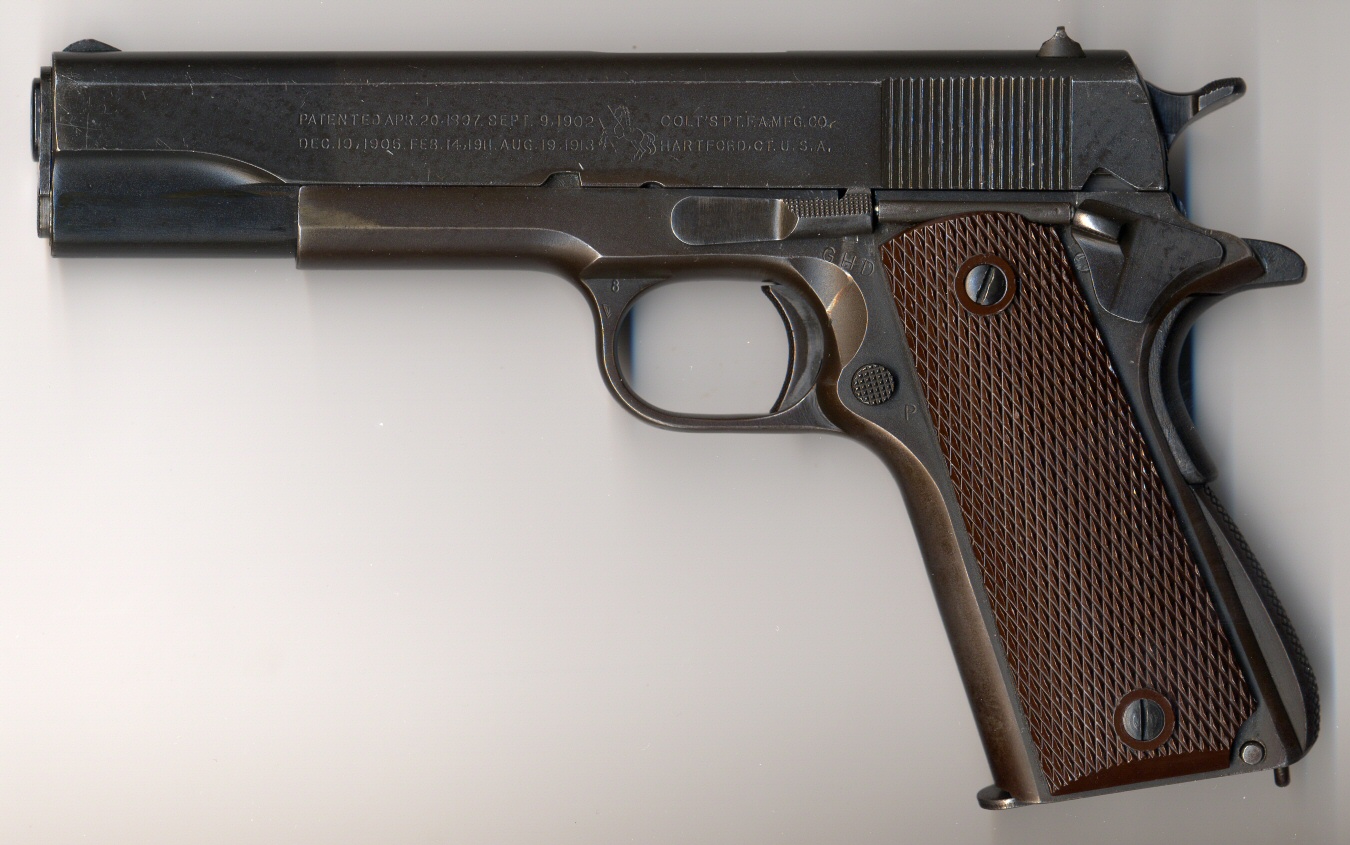
You got flags to wave, songs to sing, camp to go to, something to be a part of. And more than this, at thirteen you got to shoot a real pistol and throw real grenades. When I was a boy half his age at thirteen, or maybe a little older, a Dutch woman who lived at the end of our road told me about firing the Colt automatic. She said “It kicked like a mule.” She was loud and a bit fat and they’d built an extension on their house and seemed to own the local shop. I didn’t know she’d once been hungry. I didn’t know around 30,000 people in Holland starved to death.

A present from the Netherlands.
A present from the Netherlands, a long time ago.

She had an odd accent I thought, but it was just a Dutch accent told to a small boy in Wiltshire who hadn’t been anywhere apart from Somerset. I didn’t know so many things then. I didn’t know, for example, that if she’d been caught by the German occupying forces anywhere near what was obviously a pistol for the Resistance dropped into Holland then she would have been shot, but probably not before she’d been made to tell the names of everyone she knew who knew about the gun as well. The alternative scenario – Allied soldiers took her shooting with a pistol because that’s how you’d entertain a girl around twenty whose country you just liberated. Sure it is.

I didn’t know too that as the old man told anyone who would listen, every German boy was conscripted into the Hitler Youth at the age of thirteen. Exactly the same way that at eighteen, boys were conscripted into the army. And apart, presumably, from the freezing cold nights manning anti-aircraft guns waiting for the mile-long streams of RAF bombers, it was mostly fun. Apart from the last day of the war, when the Americans came to the village.

The SS turned up first, in a jeep of some kind. They told the boys they had to defend the Fatherland and kitted them out with brand-new guns and steel helmets and grenades from a bunker in a field, that nobody knew was there. Years later I heard that the best way to hide something is simply to dig a hole and put the thing into it, with a sign saying ‘MoD – Keep Out’. Or ‘Water Company.’ It works in countries where order is an important thing. The boys made their way down towards their village again and the SS realised they had an important appointment somewhere else more urgently, coincidentally on the way to Switzerland, and left. The schoolmaster in the little village met the boys on their way to fight the Americans. He was the head of the Hitler Youth.

He beat the boys up, made them throw all the guns in the ditch and sent them home. The Americans arrived about an hour later. The old man said they would have shot everyone in the village if there was any resistance.

It’s stuck in my head. It asks so many questions. And now I’ve written it. It’s called Janni Schenck.  It’s very nearly a true story. I can’t speak without gabbling. I’ve been ill and I’ve just slept for a couple of hours accidentally, fully dressed, instead of going out as I was going to do. But I’ve done it. I’ve got to buy some paper tomorrow and proof read it, because I can’t proof on-screen,  but tomorrow is another day. I’ve done it. And I didn’t think I could.


Share Button

The way we weren’t

I was born if not in a cross-fire hurricane, then certainly not in a Hawker Hurricane either. Although thanks to Airfix kits, I knew enough about them to kid most people along.

hurricaneFlying, or the idea of it anyway, fascinated me when I was a boy. All this were fields, an’all, but that’s another story as equally true and/or plausible. I was about to say I didn’t get on an aeroplane, as we called them in my house, until I was nineteen, but it wouldn’t be true. Somewhere there’s a picture of me aged about four, wearing a tweed coat (oh because people did in those days, all right?) and somewhat improbably, a modern pilot’s helmet, sitting in the front seat of an English Electric Lighting. One of the only things I share with Jeremy Clarkson is a admiration for the Lightning.  Someone I used to know got a ride in a Russian Foxbat about twelve years ago. She said it wasn’t like flying. Not like flying out of Heathrow or Gatwick, anyway. She said it got off the ground, got to the end of the runway then sat back on its haunches and went straight up. The same as the Lightning was designed to do, get to 36,000 feet in three minutes in 1959. It topped-out at 87,000 feet, deep into the edge of space. Think about that for a moment.

I've sat in one of these. Straight up. Although not to 87,000 feet.
I’ve sat in one of these. Straight up. Although not to 87,000 feet.

Obviously the RAF scrapped the Lightning and bought American Phantoms, which above all else, were American. The idea of an independent defence capability was a joke even then, before anyone even mentioned Trident. Aged four, I didn’t know any of this. I just loved aeroplanes.

Maybe it was my father. As a professional liar he’d claimed he’d been a pilot when it turned out that in fact, he’d been the bloke who put air in the tyres and started the engines up. He watched black and white documentaries in the middle of the night. Once he got me out of bed to make me watch something about the Blitz. Forty thousand British people died from bombing in World War Two. About the same number of Germans died in three days in Hamburg and Dresden, but nobody even mentioned that, then.

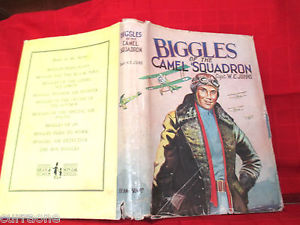
Where is this going? I wish I knew. Tangentially around a picture I bought in Bath a couple of weekends ago. It spoke to me of my childhood, or my early teens anyway, when I discovered Captain W.E. Johns and his heroic creation, Biggles. I read them obsessively, especially the First World War stories. They had something about them I’d never read before; it was years before I knew why they were so powerful.

biggles

Firstly, although obviously any mortal man having as many adventures as Biggles would have been dead before he’d done half of them or even a quarter, Johns had been a fighter pilot himself, in France. He knew what he was writing about. This Biggles drank, got in fights with other pilots, loved, shot and killed people, crashed, got cold, got tired and displayed what now are so very obviously classic PTSD symptoms. Only later when the magazine articles had proved wildly popular Biggles’ diction changed and he switched from Scotch to lemonade at the insistence of John’s publishers and agents, to widen the market to schoolboys.

But Biggles of the Camel Squadron and Biggles of 266 are the original, first attempts. And while they’re polished, perfect little short stories with a beginning, a middle and an end, they’re also very raw. When pilots die in these stories, there’s no doubt but that they’re dead and little or no talk of glory or a purpose in their deaths. I’d never, ever read about a man crying when another man had been killed before; to this day it surprises me that the first place I read this was in a Biggles book. The shock was real; I didn’t know men did this.

I didn’t know men wrote about it either. It was a different world, a long way from my father’s fantasies of flight, a long way from the Wiltshire village I grew up in. But then as now, the past is a different country. They do things differently there.

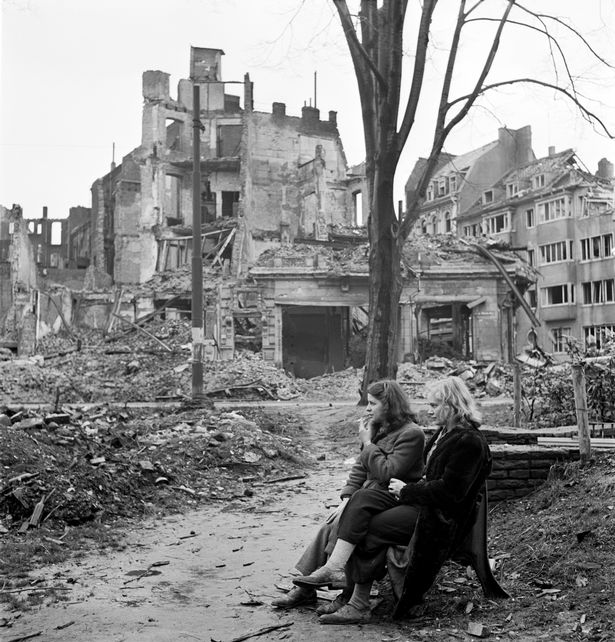
Koln 1945

Share Button

China in my hands

Dear Chinese people,

Even  though it’s written in English, even though most of you won’t be able to read it, please read this open letter to you all.

I know you don’t give a stuff about human rights or copyright protection or executing people for looking funny at Chairman Mao’s poster. I know you don’t give a stuff about child labour or employee safety or seemingly anything much at all, except having everything every which way in your Communist-controlled capitalist exemplar of a state. I blame Nixon, personally. He was the man who transformed China from where? to the country that bankrolls the West and fills its shops with the plastic tat that passes for the good life, notwithstanding that the West gave it the money to do that in the first place.

But that’s not my letter. My letter is really, really short. Just four words, really.

What do you want?

That’s it. It’s really easy. Well, it probably is for you, but I’d dearly like to know the answer. You see, this blog, if that’s what it is, sort of gets an ok-ish number of visits. For what it is, at least. But half of them are from you. In China. And I don’t understand that.

It makes no sense.
It makes no sense.


Every time I post anything, within seconds, half the views are from China. What is it about my stuff? I mean, I don’t even write anything about China. Germany, yes. Mythic Britain, quite a lot, as in the Britain in my head. France a bit. America sometimes. China not at all.

I would say you’re very welcome, but you’re actually not. I don’t know anyone in China. I went to Hong Kong once, for three days thirteen years ago and memorable as I am, I don’t think anyone in the Mandarin Orient got so fond of me they follow my blog, honestly. So it’s spyware of some kind. Something automatic. Not a real person. Watching my posts. For what? For something it can use, is the obvious, the only plausible answer. So if it’s all the same to you, please don’t. Stealing is bad manners where I come from.


Share Button

When I was dying

It’s ok, I’m not any more. It’s just a cold. But the not-all-thereness, the distanced wooliness, the feeling that I-could-physically-but-I’m-just-so-very-tired, the feeling of slowly leaving something I’ve got now that I’ve got what is obvious even to me is nothing more than a cold and a slew of self-manufactured neuro-toxins sloshing around inside me as my body tries to find somewhere to put the dead cells that fell in the Great War against some crappy cold virus.

I get about one cold a year these days. I used to get them a lot when I was a kid. I used to ask myself what the point of cold viruses was, wondering if I died the virus would die and so wondering what the point of it was. Luckily for my first foray into existentialism I didn’t know the cold virus would probably be fine thanks, longer than my cooling corpse would, anyway. I’m not sure these colds weren’t something else, some manifestation of needing to be noticed, but whatever they were, that wet-hankied, sore-nosed, always cold condensation-on-the-car-windows in a grey West Country car park while the wind sheared through my rubbish Co-op parka if I stepped outside is one of the primary memories of my childhood. I don’t miss not having colds at all. I don’t much miss being a kid, either.

I got this one because I was over-tired and in the company of people who didn’t know what a handkerchief was. All day one day I had pains all the way up the back of my legs, into my waist, for no reason I could work out. Now just the remains of the cough, the watering eyes and the terrible distance between me and everything else.

It was like that when I was dying. I don’t know when it started. In the womb, maybe, or at least the stage was set there, as it always is. My iliac vein curled around my femoral artery, in front of my spine before I was born. When I went on long-distance airplanes, as I did from the age of nineteen, and again when I was twenty-four, then again, then now and again on holidays, then a lot in my early forties, the air pressure allowed the artery to expand to about five times its normal size. I know. I can make it do it. I’ve watched it on a monitor in the ultimate real-time bio-feedback experiment my surgeon made me do.

The vein was clamped against my spine and because blood clots when it isn’t flowing, that’s what happened. I had at least five deep-vein thromboses, or possibly three Guinness Book of Records ones. Nobody is really sure, nor when exactly they happened. All but the first were preventable. The fact that they took four years off my life, drudging through at a distance, the colours of everything fading, feeling that I was slowly dying for the simple reason that I was, was entirely down to my local doctor’s surgery.

My GP had no idea what was wrong with me. He, then she, then he again tried to find DVT by feeling my leg, found nothing and concluded there was nothing wrong with me. Most of the time there wasn’t. I was cold almost all the time even in summer and I didn’t want to move much. I bought a bicycle and enjoyed going out in the lanes after work, but after the first winter it wasn’t much fun.  I found myself one December in a soaking, freezing field I couldn’t find my way out of, my feet soaked, my leg aching in a way I couldn’t understand and no hope of ever being anywhere else but cold and hurting under a grey sky. Occasionally I’d simply double up with pain, dropped to my knees vomiting. I vomited unpredictably, on three continents, leaving a sour trail of hopelessness wherever my ticket took me. Ten minutes later there would be no pain at all. I wondered if I was losing my mind. There were no lumps, no skin discolouration, nothing. I was just dying.

I’d had a relationship go wrong in a way that was entirely predictable it would. I thought I was just sad about that and this was what it was like getting older. You move about less. You feel the cold. Everybody in my family did.

From here, everything about this screams how obvious it was what was wrong with me. My childhood memories are full of blocky men in armchairs who it hurt to move, coal-fires blazing in mid-summer, living-rooms heated almost to suffocation-point. Every one of them I think now had exactly the same thing I did, iliac DVT, congenitally. They all wore fixed smiles. They dealt with it differently to me.

I didn’t die, no thanks to my local doctor (and Leiston Surgery, please feel free to take a bow at any time). But it was odd and interesting to hear a friend use exactly the same phrase about the time she had pneumonia and thought she had something else: “When I was dying….”

We neither of us said it for sympathy or a hug or maybe, if nobody minds, you know, something else maybe. Just a fact, along with the odd realisation that this was real, that we had both had the same experience, that we’d both known what was going to happen and the fact that it didn’t wasn’t really much to do with us at all. But when we were dying somehow we didn’t. Something slipped away, but it wasn’t us. Some time again it would be, we both knew that. But not yet awhile. Not yet. It’s just a cold, this time.


Share Button

Repurposing

I’m doing some new things recently. New to me, anyway. But one of the things I’m doing I’ve done before and it still gladdens me every time I do it.

That Haile Sellassie lived here, you know.

Bath on a Saturday morning, Walcot Street in the mist rising off the river flowing alongside it. OK, it’s changed. There are no coke stoves or dogs on a piece of strong, nobody claiming to be a carpenter because he can join two bits of ply at right angles (but interestingly, according to a conversation I overheard at the flea market, still not-really-antiques that can be spotted by the injudicious use of Posidrive screws). No Hat and Feathers, no Mad Carol, no Lucy in a jumpsuit, no car radios unexpectedly for sale, nor smoke billowing out of them when the vendor wired them up backwards on a 12 volt car battery or a whole host of other things that used to be. Luckily, no-one lighting a fire to keep themselves warm in the car park now where the cattle market used to be, either.

The past is another country. They do things differently there. But where would places like Bath be if they forgot their past? As the song from Whatever Happened To The Likely Lads told us, it’s the only thing to look forward to.

But some of it’s still there. I was there this Saturday. I was going to climb Beechen Cliff, but the mist was still down and there was no point, so I walked up past the Abbey. The first thing I saw was a 1930s print, some Boy’s Own illustrated tale of pilots, back in the days when aeroplanes were called that and had four wings and two propellers, when bounders wore bow ties and only sailors wore beards. £10 well-spent. I had promised myself I wasn’t buying anything, but then I remembered the time in Oxford on another Saturday morning when for another £10 I turned down the chance of buying what I’m pretty sure was an original artwork that illustrated a Biggles book. A chat and a little recollection of old times with the woman in a fur coat on the stall that chilly morning, two steps away from a jumper exactly like the one I’d had in mind and thought was going to be about £200 so I wasn’t having that this winter. Except someone else had worn it, apparently for about ten minutes, so that saved £190.

Just around the corner, back up on the street and I found a kettle. I’m not really a copper kettle sort of person, but I have this boat. OK, it isn’t in the water and the chances of it getting in the water look slimmer each week this year, but I can still go and sit inside it and drink tea. Or at least I could if I had a kettle. But I don’t want to get Alzheimer’s from some horrible aluminium thing and I don’t want a shiny brand new piece of German design (well ok, I do, a lot, but it wouldn’t look right on the boat) so I was stuck. Until I went into the charity shop and found it.

IMG_3141
As it was. I think it’s 1950s.

A couple of minutes with some Brasso and rubber gloves and it polished up a treat and no error gorblimey guvnor. It looks great and fits right into the wooden boat vibe that goes on in a wooden boat, surprisingly.

A print, a jumper and a nice kettle, all for £30. But more than that, being part of it again, Bath on an autumn Saturday morning.

IMG_3142
Not long after. It’ll do, I think.

Those who’ve read this stuff before will know I went to university here. I grew up  here (discuss, with reference to some laughably inappropriate partner choices which would have been more laughable if they’d happened to somebody else, I think), or at least, twelve miles away. When I was about eight my father used to take me to Bath early on Saturday mornings. I was so excited about this I used to try to sleep in my clothes because I had to get up so early. It never worked – I could never sleep like that. But we still went to Bath. The market I sat in is still there. I bought some cheese there this time, rather more than half my life away. I wrote a poem I was going to call that, but it got called something else instead. Wrongly, I think now. And there, as some people know, lies another tale, from and for another time.

Share Button
Follow on Feedly