A certain smile

Trop belle pour toi
The first bus left at 03:30 and after the final show and the singing and the tears and the laughing and the exchanging of the addresses and the hugs and the couple running their hands all over each other outside by the bins – and they were teachers, not kids. Or I would have had to use Stern Teacher Voice™ to say “Stop That Now. Stand Up, The Pair Of You. What’s Your Name? Not You. I Know Your Name…..”

The litany you can remember from your own school days, but in this case I left them to it and walked away un-noticed. Straight to the staffroom, to tell everyone I could find, obviously, or at least the two French women I liked to talk to. But anyway. Alors.

I had a meeting that day, one that might change my life, a discussion with a former BBC script writer about a TV script about Hereward, our almost forgotten resistance fighter, a man good with a sword and an axe, a David Beckham of the jousting field, if Beckham had come from the big house in the village with the stables, where the daughters have their own ponies and Nanny has her own car because we don’t want her living in. I mean, it’s not 1070 or something, is it? That kind of Beckham, where the kid goes off the rails because Daddy keeps bailing him out when he messes up instead of using Stern Teacher Voice™.

Remarkably effective used sparingly, no more than once a week maximum. Like anything else, a shock tactic has to shock and if it’s something you do every day then it isn’t something that’s going to shock anyone, apart maybe from yourself when you realise how useless it’s become. So go light on it. And I did, which means I didn’t even let the couple know I’d seen them. Just the French women, obviousement. Just in case they said ah dewnt know what ees zat chose, at which point I could say look, I’ll show you. Ennee, meenie, miney mo, um, you first. Er, no, um, no, first choice…. Obviousement.

The darker haired of my French friends advised me to get some sleep between the first bus going and the second one at 07:30, so after reading her a story for a bit we went to our separate rooms and did, for a little while. Sleep, you understand. Not er, you know. It wasn’t discussed. About an hour and a half, I think. Sleeping. A little and deeply, but not long.

After the last bus had gone I was left standing in the sunlight, my French friends driving down the A12 back to their lives again and after the last free, weird breakfast that had everyone English wondering ‘why do French people mix up their food like this?’ and French people wondering exactly the same about the English. The answer being that it’s school food and nobody ever eats like this nor will again unless they’re kind of sad man who can remember School Dinners being a concept restaurant.

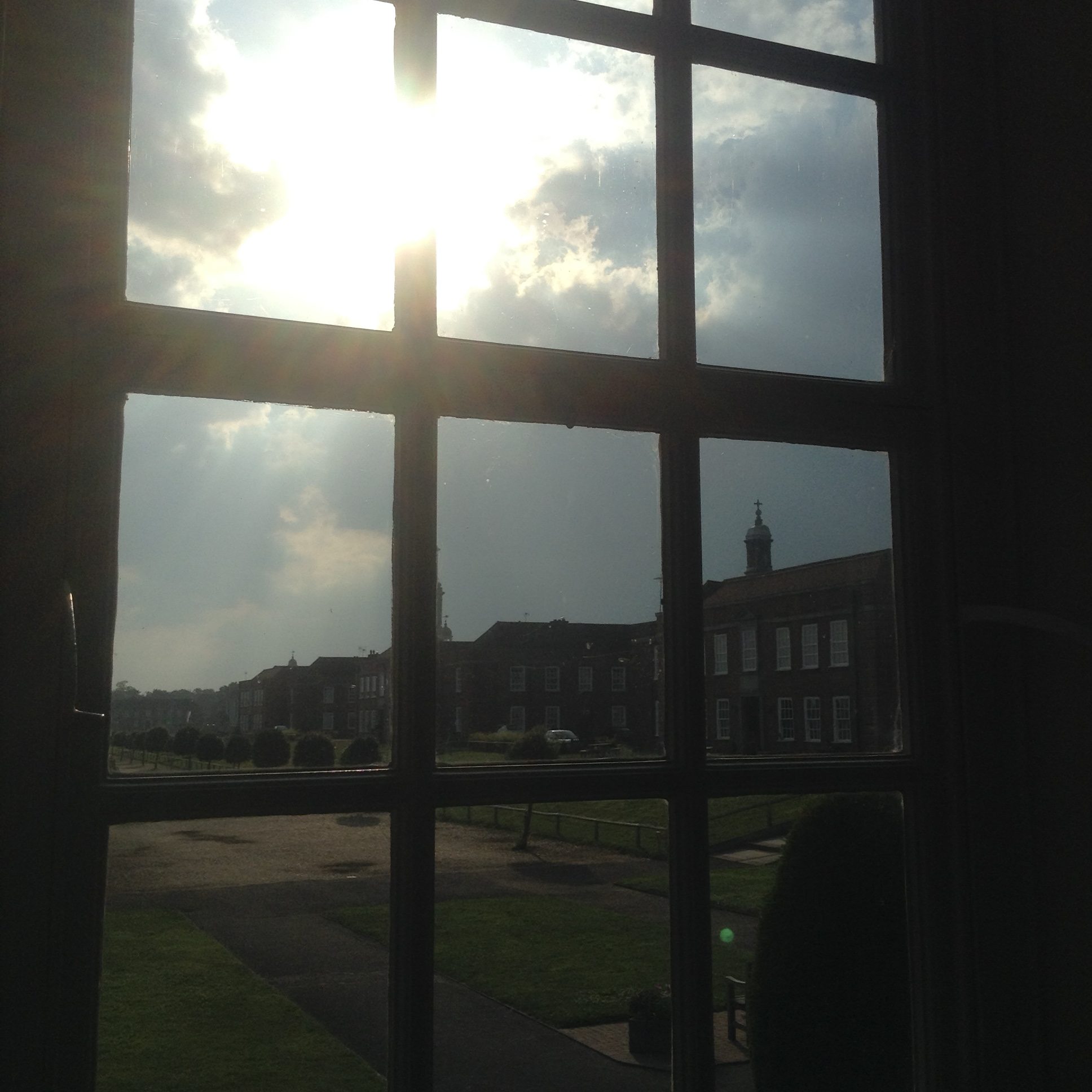
And after a short walk in the sun down to the river and the peaceful little square-towered village church in the woods, a church straight out of Miss Marple, past the alpacas, past The Big House where Hereward Beckham could easily have lived, although I preferred to think the offspring of the house was more like one of my favourite pupils, the quietly, exceptionally clever girl who will be an international lawyer and make an absolute fortune, or the girl who liked riding and athletics and who reminded me so, so much of an ex who tugs at my heart still, if I’d known her before all her stuff went wrong, when she still had dreams and confidence and a life before her. But nothing I can do about any of that on this sunny morning except be quiet for a little while in the sun, remembering all of these new people who are gone now in the still of this huge school by the river this summer morning.

I said goodbye to the two French directeurs who had become my friends. The other English teachers hadn’t seemed to bond with them that much but I found them good company. We joked and talked about food and language and how the French burned Joan of Arc, which they seemed to have got wrong in their history books as her having been handed over to the English who had the lighter fluid that day, but no matter. One teenage girl, flambe, s’il vous plait anyway.

I packed quickly and got in the car and drove away, thinking about the way someone’s teeth were so white against their tan, and blond curls and the way the red tabs on the back of someone’s trainers stuck in my mind. Thinking about, as Francoise Sagan put it, a certain smile. A tone of voice. A glance. A delicate hand running through hair. There are much worse things to do than summer school.

Bon. Alors. Trop belle pour toi. Now there’s a TV script to write. So let’s get on, because I’ve got Stuff To Do.

Just, oh, you know.

Share Button

Another chance

A long time ago I was in a musty weekday sailing club bar, on one of those English days when life is passing helplessly along outside the window, the other side of where the buzzing fly was. I looked out over the little lake outside and caught the end of what the woman next to me was saying.

On the water, she said, out there on the water, it’s like having another chance.

We didn’t fall sobbing on each other. Or wrestle each other to the floor tearing at each other’s clothes. We were English, after all. But we knew exactly how the other was feeling. Sort of but not quite the same as those silly plaques you find in twee marina shops, that say things like A Day Spent On The Water Does Not Count As Part Of Your Allotted Span. Which if there is a God and he’s English (and obviously he would be, if there was. Unless He was Jimmy Stewart, which was always distinctly possible) is almost certainly true, but not the point. What the woman meant was just as an impressive friend can’t recall canoes at school without relishing the recollection of teenage solvent abuse (yes, you. Bless you x) something about sailing always makes me think about school and the way we learned to sail there. It wasn’t grand. We had two Enterprises and two Mirror dinghies I hated because they were ugly, and a gravel pit next to the railway station and Mrs Shearn, who was cool and Mr Collins, the good PE teacher, who’d been a paratrooper in the War,m the real war, so he didn’t have to prove anything to anyone, unlike the runty little wannabe PE teacher he had to work with. We did sailing because we were rubbish at games. Because we were the cool kids. Because we could read, and drove to Stratford to see Shakespeare on our own time and wore silk scarves and desert boots and generally weren’t right. Except we were, in our haze of patchouli and Samson rollies in liquorice paper gusting up whenever the dinghies went round the back of the island out of sight of the teachers. Who knew exactly what was going on. Who were utterly cool, those two.

But some years on, I tried to get my Folkboat into the water today. It’s been out for two years so a seam has opened up and needs re-caulking. We’re going to have to try again tomorrow and there is a lot on tomorrow, with a new summer school starting, although thankfully not too far away. I don’t know the schedule yet, so I don’t know when I can get to the boat if I can’t get it to its new mooring tomorrow. Launch time is 11:30, High Water is 13:15 and there is two hours either side to get her into her berth. Then she’ll get another chance. Again.

Share Button

I’m not a racist but –

Thomas Mair looking to the right, just like the people who tried to pretend he had nothing to do with Britain First.

After the Referendum I’ve learned a number of things.

  1. The most important issue facing the UK today is how rubbish Jeremy Corbyn is. This is the major preoccupation of the UK media, so it must be true. The fact that the entire referendum was a squabble between entitled rich boys who will never, ever have to face any personal consequences of their actions is wholly and completely irrelevant. Especially when one of them is paid hundreds of thousands of pounds a year to promote himself in the fiercely independent British press owned by people who aren’t British, but know much more about how to be it than people who actually live here.
  2. It was never about immigration. Oh, OK. Well, it certainly wasn’t about economics, was it?
  3. It was about democracy. Which is why there are no plans whatsoever to reform, let alone abolish the completely undemocratic House of Lords or the monarchy, and stand to attention when you type that word or you’ll learn to expect Britain First knocking on your door, too. Which now you might anyway, because Britain First are not to be condemned. And that’s official. After MP Jo Cox was shot dead by a Britain First supporter, who was also saying in the dock “I am a political activist,” just in case anyone was unclear what this murder was about, not a single MP condemned Britain First. Not one. That fact alone tells you pretty much all you need to know about racism in Britain today. You don’t need to approve of it. All you need to do is refuse to condemn the people doing it.

I’m quite British, as well as being of a certain age, so I’ll give you some British. We all like British, don’t we? I mean, not many other countries do now, but we’re really, utterly brilliant. It said so in all the tabloids and they don’t lie. Except about Hillsboro. Or Orgreave. Or Charles de Menezes. Or Stephen Waldorf. Or Freddie Starr eating my hamster. But apart from that they don’t, ever. So are you sitting comfortably? Then I’ll begin.

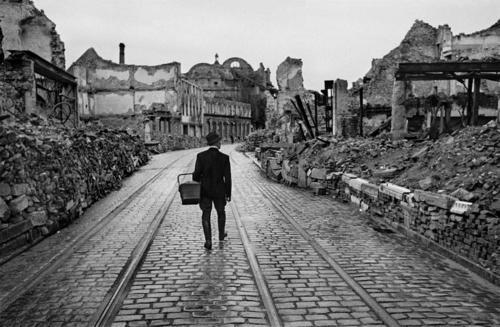
Once upon a time in Bremen or thereabouts, a friend got talking to an old lady who used to live next door to some Jewish people a long time ago. One day they weren’t there. Their front door was open though, which most of the street found quite convenient when they needed to borrow household items like a piano, or a sofa, or some curtains, or in fact most of the contents of the house now it was obvious nobody with hair like that was coming back to ask for a cup of sugar, ever again.

“So,” my friend said, and with her hair like summer wheat and her cold blue eyes and the way she said “So!” when she was just being herself and trying to be friendly, it was always quite scary if you were brought up on a diet of Colditz and The Great Escape.

“So! Where did they go?” She wanted the old lady to say the words. Auschwitz. Dachau. Treblinka. Any one of the litany. Or even just: “I don’t know. ” But none of these words came.

“They just went,” the old lady said. My friend asked again.”But where?”

“Well,” a little more slowly this time, “They just went.”

Because the old lady knew the rule that my friend had never had to learn, thanks to the EU. You do not ask where people go when you know racists came and killed them. You do not ask where people from another race are taken when your name might go on the list, or anyone else’s. You do not call the police when the neighbours are taken away, especially when it was the police that took them. And when you have to face what has happened you don’t say “yes, but I got a new sofa out of it.” Except that’s essentially what some people are saying exactly, here in the UK, now.

Today I’ve heard ‘well, there are bound to be some casualties.’ So it’s ok that hundreds of billions have been wiped off the economy. It’s ok that the £ is plummeting against the euro which is supposed by Brexit to be such a failing currency. And it’s totally ok that a hundred racial attacks have been recorded in a couple of days, that a shop has been firebombed, that leaflets telling Poles they’re vermin have been posted through letterboxes.

Nice Mr and Mrs Brexit didn’t do it. They just voted shoulder to shoulder alongside the people who did. And when those different people go, once again, Mr and Mrs Brexit with their shiny principles and their Cross of Turkish St George and their reduced pension they voted for and their intact, laughable non-democratic government they wouldn’t change for all the tea in China, even if they could afford it any more, despite, or perhaps because that They’ve Got Principles, still won’t know where they went.

They just went.

Again. Funny how that happens. So if you’ll excuse me I’m not going to be singing Tomorrow Belongs To Me. I know all the words. And I know how it ends.

 
https://youtu.be/29Mg6Gfh9Co

Share Button

There’s this place

If you remember awful films from the 1970s you’ll recall The Eagle Has Landed, when Michael Caine was fatuously cast as an aristocratic Cherman Orfizzer. Torn by the demands of duty and the Prussian Code he refuses to surrender holed up in an East Anglian church. Somehow he faced the destruction of the vestry by an equally improbably-cast JR Ewing without saying that he’d been only supposed to blow the bleedin’ doors off. The acting from everybody, not just Michael Caine, was atrocious. Americans with their patented Bullet-Proof Film Arm™ clutch at gaping bullet wounds as if they’d got splashed doing the washing-up. Storming the church the GIs stand usefully just inside the door heroically spraying bullets instead of getting shredded by the hail of outgoing fire directed at the one place they’d be guaranteed to have to be. Everyone who’s supposed to be German has to suck their cheeks in and dye their hair blond as if they were on their way to see David Bowie in Berlin, although as it was made in 1976 maybe they were.


It was different in the book. In particular right at the very beginning, where author Jack Higgins fictionally or otherwise claimed to have found German tombstones in a Suffolk churchyard. Apparently there are some, but I’m not sure where. Just down the road from me a big house was broken into while Churchill’s double was there, right on the coast. Details of the local defences were stolen, along with the petty cash. Several sergeants found they weren’t sergeants any more. Those are checkable facts but more easily now than then.

In the 1980s someone who lived there told me “something” had happened in a little village down a lane on the coast. Nobody knew what. But something did.

In the early 1990s the rumours resurfaced. Shingle Street got famous. Questions were asked in Parliament. Why was whatever did or didn’t happen an Official Secret for 75 years?

The rumours themselves were confusing. Peter Fleming (yes, Ian Fleming’s brother. The one who married her out of Brief Encounter) was involved in British propaganda in the war. One of their jobs was to make the Germans think that Britain had secret weapons of mass destruction to repel an invasion instead of the laughable 50 tanks and 200 field guns that were all that was left after Dunkirk.  The one the propagandists chose was fire. Somehow, the story went, the British had discovered how to set the sea on fire.

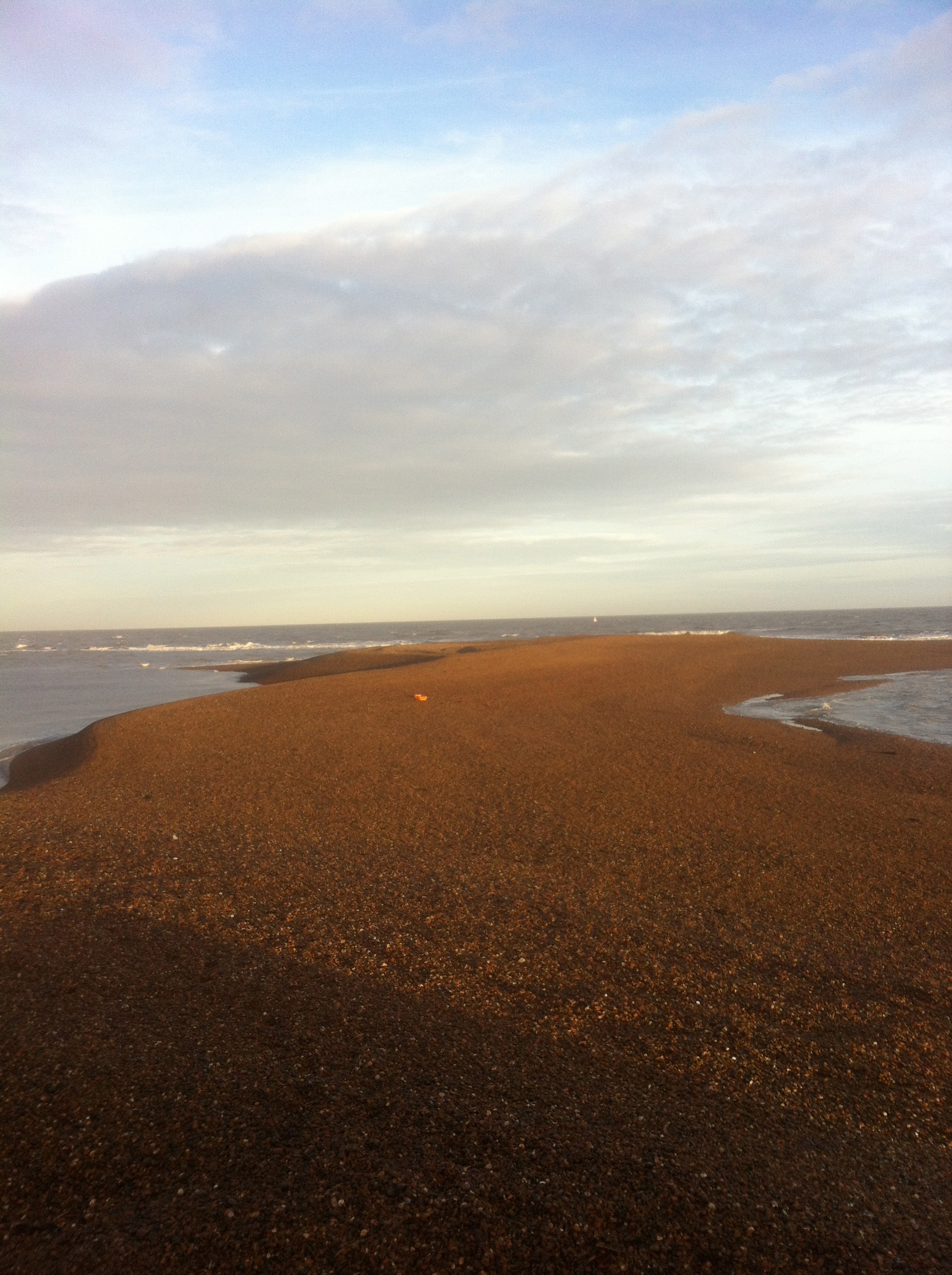
IMG_1310

As apocalyptic visions go, it’s not bad. When I was about six my mother said a sunset looked as if the whole sky was on fire. This was a time when thanks to nuclear weapons that could have been a distinct possibility for anyone who wasn’t a politician. I still remember that nightmare. It makes me shudder still.

But the rumours didn’t just grow. They were corroborated, with evidence. People in Germany saw train-loads of burned soldiers coming from the West when all the fighting was happening in the East, long years before D-Day. On both sides of the Channel, people reported secret mass graves being dug. Less refutably, some people in Suffolk recalled an invasion alert and actually seeing burned bodies, at least one boat with German markings wrecked on the shore and an emergency request for coffins to be sent from Ipswich to Shingle Street. All checkable, not rumour. But who were they? One theory is that they were Germans dressed in British uniforms. Another, that they were wearing British uniforms because they were British and got caught in the wrong place at the wrong time, a training exercise that went wrong.

The Top Secret classification in itself isn’t that mysterious. Everything relating to state confiscation of private property is classified, and all of Shingle Street was summarily snapped up by the Government and everyone told to leave. There used to be a pub there. On VE Day the Army blew what was left of it up. They wanted a bonfire to celebrate and there wasn’t any other wood nearby.

There’s no evidence of mass graves that I know of, but there was no evidence of anything happening at Slapton Sands where the Americans were massacred on the golden beaches of Dorset. That was kept tucked up out of sight for fifty years. Shingle Street is just down the road from me, a cycle ride away. I don’t know what happened there and I probably never will. Something did though. Something happened everywhere.

The pub was never rebuilt. One of the Martello towers is derelict. One has a million-pound penthouse on top. One has a Home Guard post improbably still cemented into it. A rare, unusual circular pillbox guards the bridge over the ditch that would have been filled with petrol. Another, much rarer one-man iron pillbox rusts away in a lane a mile or two up the road. Anywhere else it would be in a museum but it’s Suffolk. There’s so much history here, so little now.

And no. I didn’t know Lalo Schifrin did the music, either. Damned bank managers. They never change, do they?


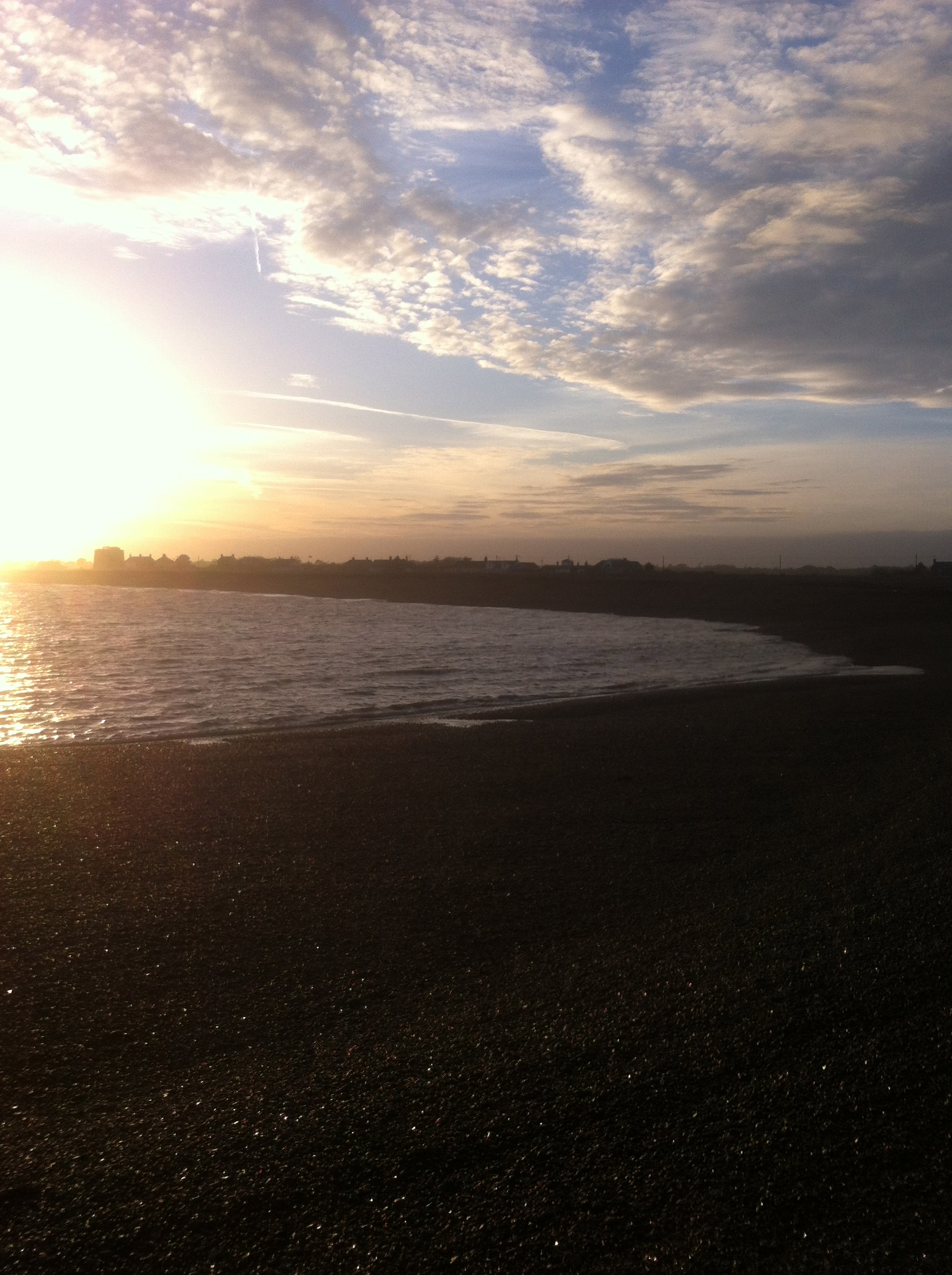
IMG_1318


Share Button

Getting serious

Once upon a time I wrote this thing. This script, Janni Schenck. Then I re-wrote it and each time I learned something else I had to re-write it again. I’ve lost track of how many re-writes I’ve had to do.

Not a game. Not at all.

For years I convinced myself I couldn’t write it. It’s about a German kid in a small rural village in 1945. I’m not German. I only went to Germany once and that was Hamburg, which nice though it is, isn’t any more like a rural village than Heathrow is like Keevil airfield. Exactly. Where I grew up. Where we used to ride mopeds. Where there was a huge WWII resettlement camp for Polish people. More irrelevancies; that was the point. There was always a reason not to write it, because I thought I couldn’t.

Then late last year I got pneumonia. It really wasn’t funny but one good thing came out of it: I wrote Janni Schenck in about ten days. That might explain why it needed so many re-writes, but on the plus side I only remember sitting down to write, with my laptop, on the sofa practically in the dark twice, for about ten minutes. It must have taken longer than that, but I honestly don’t remember.

So the update: when I wrote my first script it won the BBC Writers Room prize, which was going to pitch it to Cascade studios which I duly did and equally duly they didn’t option it, life being unfair. Later on, someone who works on scripts for a living told me ‘it’s not a script.’ She also told me that Cascade’s rejection of it on the basis that there was ‘a gap in the narrative arc,’ (unlike say, the millions of narrative gaps in Love Actually) was standard. As she said, ‘there always is.’

I sent it to Film Suffolk via an actor friend who liked it and sent it on to someone who might be in a position to produce it. He sent it back too, but for reasons I’d predicted. More than somewhat surprisingly he’d written a screenplay about a German kid of the same age, set at the end of WWII in a little German village near where my semi-invented German village was. Or wasn’t. I don’t know where the real Janni Schenck’s village was and I think he’s long dead given I met him nearly a quarter-century ago; I set it in the fictional village in Fall, which is a real place but these days is mostly under a reservoir. It caught my eye not for its name but for the story in the newspaper a while ago, about how the water was drying out. Fall was resurrecting.

They only live in old photos now.

I sent it to an American festival where screenplays they like are performed. They liked it but they didn’t perform it for a number of technical reasons, none of which were what I expected and all of which are fixable. There are three major things to do, one of which I’ve completed and the other two I’m wasting time not doing today, so by six o’clock or it won’t get done.

The reason Film Suffolk’s producer friend didn’t want to get involved was for the reason I’d predicted. Outside Germany it’s going to be hard to place. Germans in films are Bad. Everyone knows that. This is a world America saved, don’t forget. At the cinema, anyway. Band of Brothers had the 101st Airborne showing the Brits how to do it at Arnhem don’t forget, which is a pretty good trick given there were precisely no Americans at Arnhem at all. None. Zilch. Nada. It never happened. Except on TV.

So I need to find a German producer and one who’s worked in the genre, as we say, taking off our hand-crafted Persol shades and looking intent. And I might have found one, after only a very little research, if you can call Google and Wikipedia ‘research.’ But don’t start me on that.

Please step forward Herr Tom Tykwer. While I was teaching kids to shoot in America and driving my Chevrolet to Gene Fleck’s Meadow Inn with a cheerleader called Nancy-Jean (no, I actually, tragically actually did all this stuff), Herr Tykwer, who I am going to be incredibly polite to before I’ve met him, was setting up a film company. And he made a film dealing with a similar theme.

Four Days In May is curious. It’s about a boy in the Hitler Youth, about the same age as Janni in 1945, set in the very last week of the war. The end of Janni’s war came about a fortnight earlier. But other than that, very similar.

I’ve just signed-up for the London Screenwriter’s Festival,  but first a weekend course on re-writing.

The course promises to transform it from good to world class. And so far, I know it’s good. When the only negative comment to date is “I’m not reading this again – it’s too upsetting. Sorry,” then although I hadn’t intended to upset my friend, it wasn’t the worst thing she could have said about it.

There were serious reasons she’d been upset by it, but it’s a serious subject. When you’re thirteen you only know what you’re told. For some people, that goes on for the rest of their lives. The tragedy is that for some of those, that’s quite a short time-scale.

Share Button

Suddenly it’s May

Suddenly it’s May and I remember this is when the sun shone.

This is when I walked in new grey jeans, new boots too,

Through the woods I’d always meant to walk in,

Dappled in unfamiliar sunlight with your dogs

Walking them along the river path back to you.

Share Button

Blurred lines

I did a thing I’m not sure about today. It’s about totemism and maybe it’s not a bad thing in itself and I did it for a reason that isn’t bad, but I did it. And I’m not 100% happy about it.

hj cap

A couple of years ago I was in Spain. A friend from university and her husband took me to a huge outdoor market, the kind of place I’ve always loved, in a little Spanish town whose population probably doubled that day. I got talking to a Moslem woman from I don’t know where. She had a cutlery stall and because I needed some pheasant shears (yes, needed. Is there a problem with that?) and because I was fascinated by the special little knife for bread rolls they like in Germany and because I asked where they were made, Solingen or somewhere else, the woman assumed I was German. I’m not.

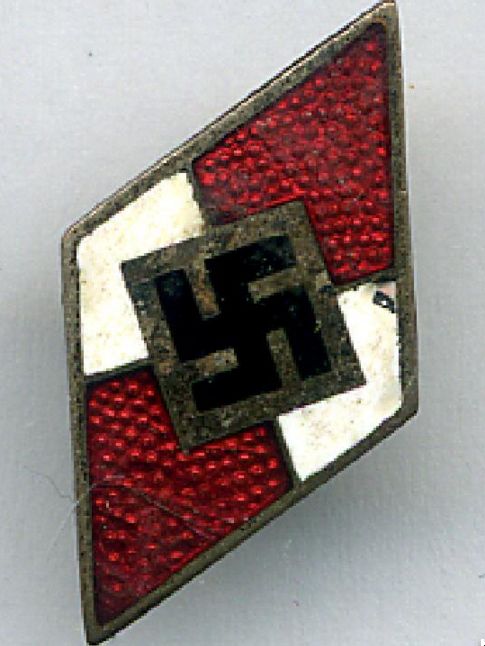
Presumably someone who was had got rid of the Nazi Party badge on another of the stalls in the market. Or their kids had, or their grandchildren had. Great grandchildren, maybe, now. A woman whose grandfather was in the Wermacht, who describes herself as ‘the third generation of the war’ is forty this year. Her family were going to throw her grandfather’s things from that time away until she took them out of the skip her mother had put them in. Because it happened, she said. It was a real thing and it happened and forgetting it happened makes it easier for it to happen again. The little black and white and red enamelled badge was nothing to do with him. But there it was on the stall.

I didn't know this was a Hitler Youth badge until I looked it up tonight. More chickens coming home to roost.
I didn’t know the badge I saw was a Hitler Youth badge until I looked it                    up tonight. More chickens coming home to roost.

At one time there were 16 million members of the Nazi Party. You joined, or you didn’t, according to how you thought. Most people didn’t, evidenced by simple arithmetic. I’d never seen one. On May 10th 1945 it was very difficult to find anyone who openly said they were members of the Nazi Party, let alone wore the badge. Anyone with any sense had thrown theirs into next door’s garden.

I didn’t buy it. A week or two later I asked my friend if she’d go to the market and get it for me, as a rare thing, as evidence of the thing that happened. As part of a story that’s now forgotten, how someone ended-up in the east of Spain, a long way from home, forever. I didn’t tell my friend all of that. I should have. She went nuts at me.

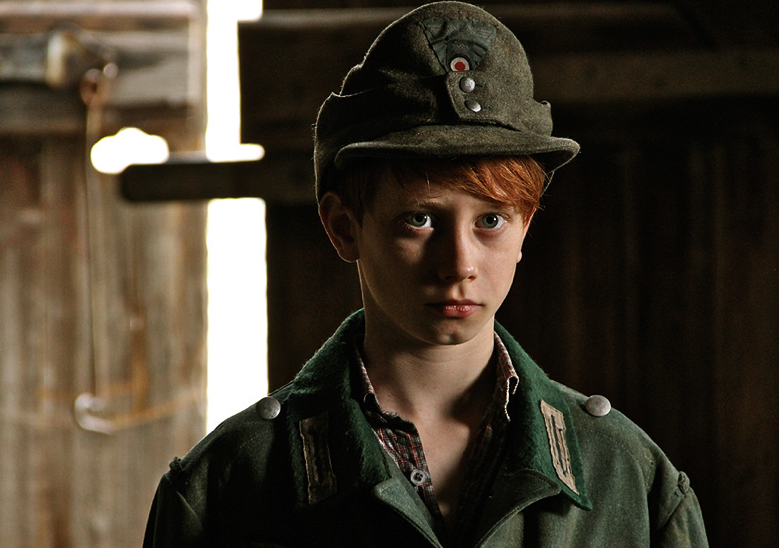
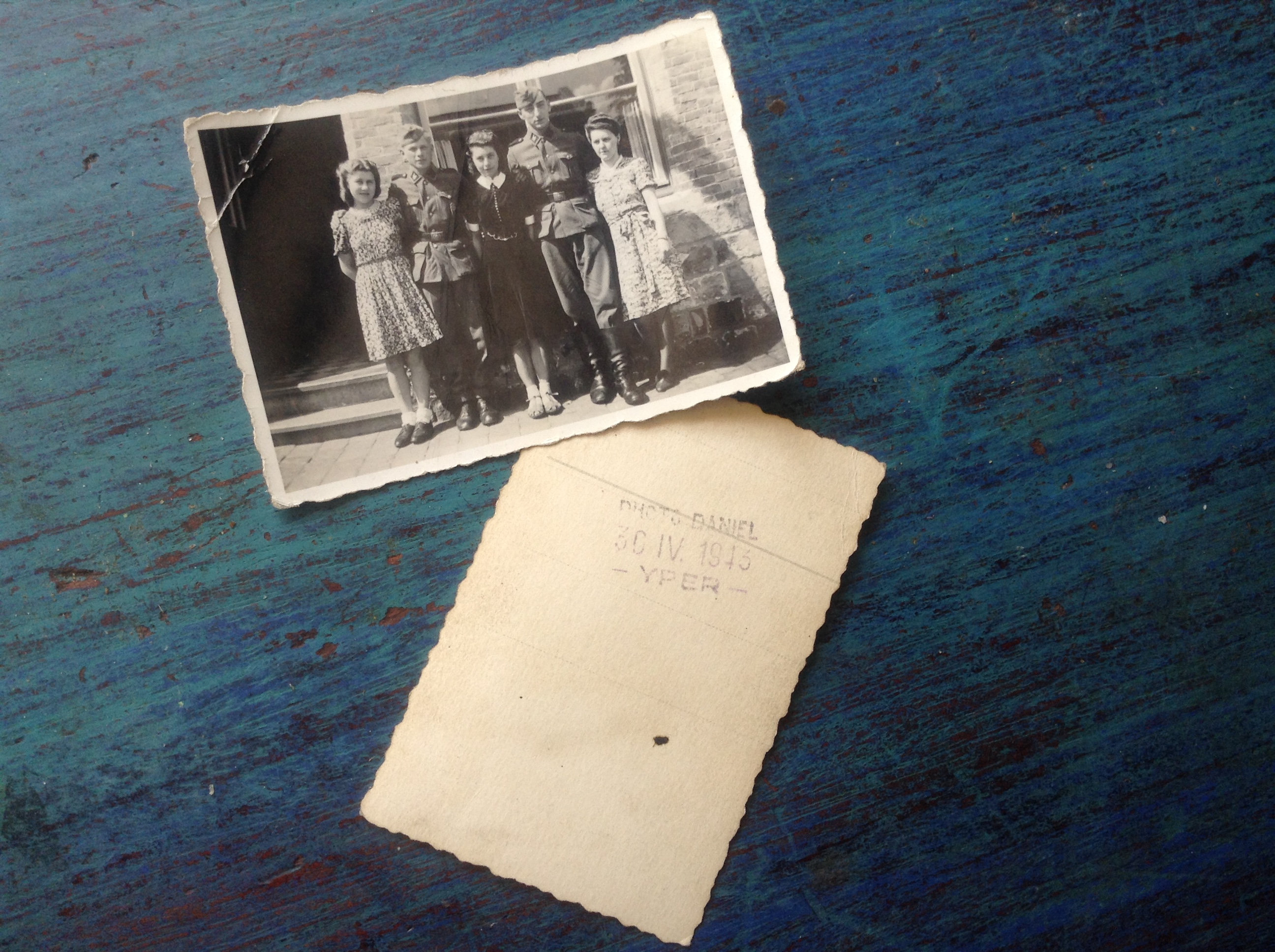
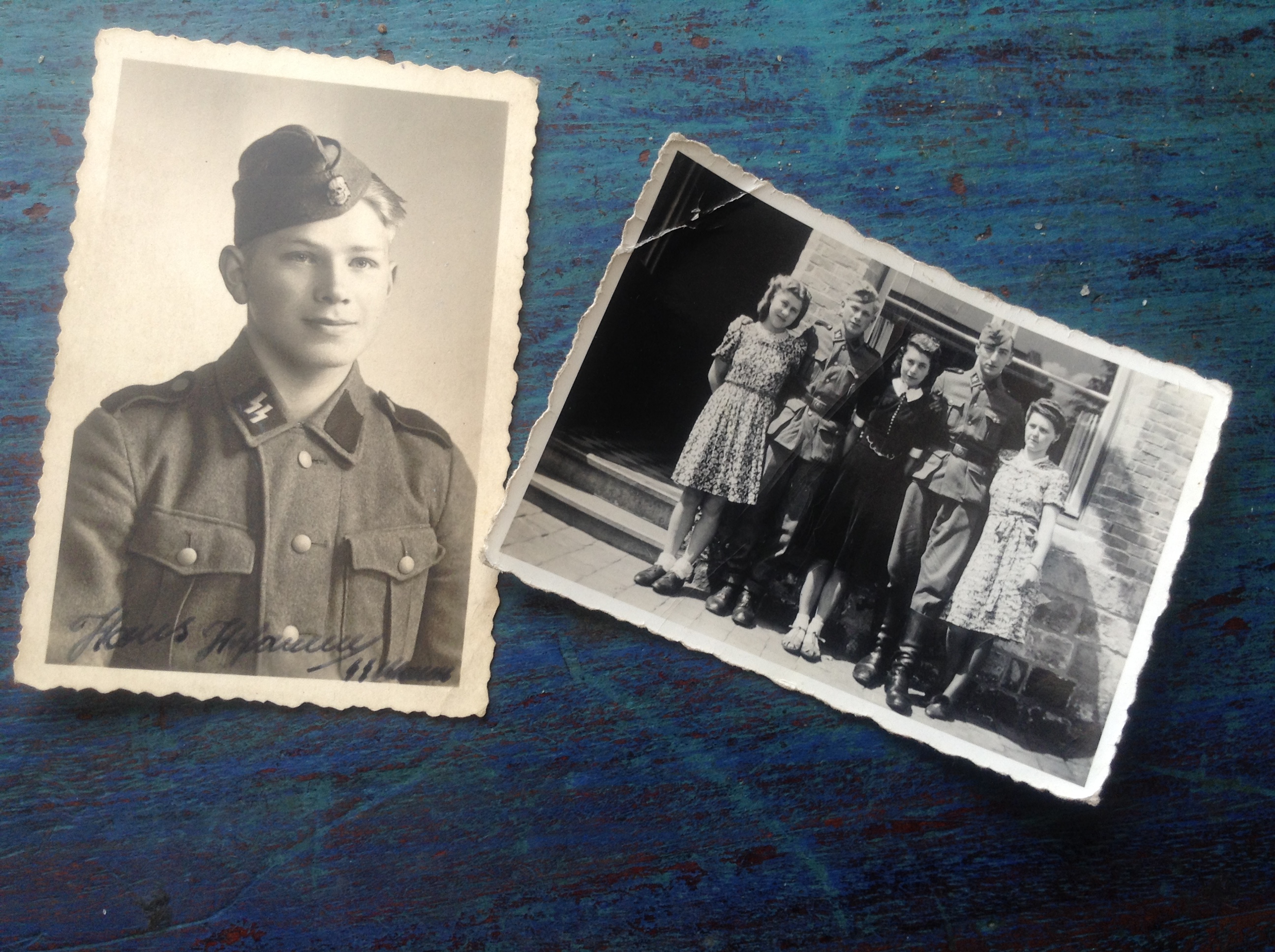
And now I’ve written the screenplay Janni Schenck, about a boy who wasn’t a Nazi but got conscripted into the Hitler Youth on his thirteenth birthday, like every other German boy born when he was born. I’m trying to generate a publicity campaign for it. I used an old photo from another friend’s grandfather’s things. I think that boy died in 1944, but I don’t know and now I never will, unless I can somehow read his name on the photo and find the records. And he was SS, not Hitler Youth, as the flash on his collar tells the world.

I thought of using a friend’s young son and photographing him in a Stalhelm, but I don’t have one and don’t know anyone who does. And apart from anything, it would have to look new, because once, when the things in Janni happened, it was. I didn’t have a couple of hundred pounds to spend on an original one for a couple of photos and I didn’t want to buy a Chinese reproduction and wait month after month for something from EBay. A cap would be the answer. An M43, a Feldmutze, but the only ones I could find again were made in China and currently in Hong Kong, or silly prices. And there was that thing.

I found one today at a flea market. It was £10 and I bought it, hoping it’s ok to buy it. Hoping it doesn’t have more baggage with it than it self-evidently, unavoidably, ludicrously obviously has.

It doesn’t have a badge of any kind. It’s a very standard Wermacht grey wool M43, much too small for me. About right for a 14 year-old boy. It’s just a piece of felted cloth. But it doesn’t feel completely right, buying it. I haven’t tried it on. I’m not going to. I know what that woman’s mother felt like now. It feels wrong just having it in the house. Because it happened.

Share Button

Silver-black phantom bike

Long ago and far away

I got my first bike at 16. Sort of. It was a FS1-E, a Yamaha, a moped. I had a horrible cheap blouson leather jacket of the kind the Fonz used to wear and that was about as far as the resemblance went. About as far as the time I went into the Polish deli in Trowbridge, thinking it was going to be like a deli in New York in the films, full of guys in fedoras and trenchcoats and women looking like Marilyn Monro. It wasn’t.

But anyway, the FS1-E was the first step to freedom. Then I got a Honda CD175, chiefly because it was bigger and a ‘real’ motorcycle, but there wasn’t much style about it. Then I passed my test on a Triumph 250 Trailblazer and stupidly swapped it for a Norton Dominator (steady on, old girl) that ran for about two months out of the two years I had it. And then this one.

I had other bikes after this. A BMW 1000. A Harley Sportster that started as an 883 and got bored out to 1,000cc with a fuel-injector bolted on. But this one in the picture, this one was different. This one was my bike.

I found it in a shop in Southampton in my second term at the university there. Someone had taken a Triumph 650 Tiger engine and bolted into a chromed Norton Slimline frame. It had started out as a cafe racer I think, but somewhere along the line someone had put higher handlebars on it. They hadn’t painted the tank, which is why it was £300. I sold my VW Beetle to get it.

It was the first big bike I’d had, but it didn’t seem to weigh much. I never knew what the top speed was because with the high bars on the wind was too much to deal with much above 85. It was happiest on the roads like the A36 back then, which was a windy two-lane with hardly any police on it ever, that snaked along the river valley out of Bath and out towards the Red Lion at Rode, then wound on out along another valley towards Salisbury, through Warminster, Codford St Mary and Codford St Peter. There was a difference. One had a garage that sold petrol.

Pretty much as soon as I got it to Bath the clutch packed up, but I learned how to change the worn-out clutch plates and put them in and true them up myself. I was proud of that.

The exhausts were another story. I didn’t like the look of the silencers on there and they were a bit rusty anyway, so to complete the look I got rid of them. It was insanely loud like that, so I went to Halford and bought two silencers stubs for a VW Beetle and rammed them into the pipes. That sort-of worked but it didn’t look right. Back to Halfords and a pair of slash-cut luke-warm car exhaust end-pieces. Job done.

Naturally, there were problems. The sidestand was always too  short and there was never a centre-stand. When I clipped a manhole cover leaned over, powering out of a bend in streaming rain on the last long straight under Salisbury race-course the back end flipped out to the right, then left, then right like a snake with its head caught. I knew if I touched the brakes that would be the end of everything and all I could do was the right and only thing, just roll the throttle back very, very slowly and somehow it stopped doing it. I never once dropped that bike, let alone hit the highway like a battering ram, whatever Mratloaf might have advised.

The biggest problems started after I set light to it though. I’d spent two weeks painting the fuel tank blacker than a very black thing indeed, spray, sand it back, spray, sand it back, spray, sand it back at about twelve-hour intervals until I ran out  of first paint, then spray varnish. At the end of that it didn’t look black, it practically shone as it absorbed all other colours. And equally naturally, I’d sprayed paint inside the tank so as soon as I put petrol in it for its inaugural run it flaked off and clogged the fuel line. A nineteen mile jounrey took over an hour and a half because it kept stopping until I got off and blew and sucked the crud out of the fuel line. Got to girlfriend’s house. Kicked it over to start it up. Blowback.

Because someone had junked the air filter there wasn’t anything to stop a backfire spurting flame out of the carburettor. But this was then and air filters were a bit effete. It didn’t matter. It was just like a match flaring. You just reached down and turned the fuel tap off and it would go out. No problem.

Except I couldn’t find the fuel tap and pulled the fuel line off instead, still sitting on the bike I’d just put two gallons of petrol into. I thought I probably couldn’t run faster than two gallons of exploding petrol so I’d better put it out. Luckily I had a full face helmet on, and a leather jacket fitting sweetly to my brain, as the Stranglers used to put it, and more to the point, long leather gloves on. I couldn’t see past half-way down my arm because of the flames. I remember that. It wasn’t a comfortable feeling.

By the time I got it out the fire had melted the insulation off the horn so it was fused ‘on.’ My girlfriend’s mother had seen it all happen. She came out of the house and said my bike had leaked oil on her drive. After that we found other transport and other things to do. The last ride on it ever was one late Spring evening alone, out around Larkhall and the combes running up to Charmy Down on the northeast edge of Bath before I rode back to the house in the picture, next to the little park where nightingales sang one night as I walked out of there. I remember every part of that slow, sad ride, feeling the cold start to seep into the bones of my legs, smelling that blend of hot oil and cold petrol and Spring and the smell of just being alive there and then, in Bath, a long time ago. It was my bike.


Share Button

I’m appealing

Or Janni Schenck is, anyway.

In case you’ve missed the flurry of posts, after fifteen years when for most of them I didn’t think I could write it, after two years of buying every second-hand book I could find and being that sad bloke with the bookshelf full of broken-spined books with black hakencruzen on them (well, if you don’t know it won’t matter, will it?) and a good bout of pneumonia early last winter that I sat through in a daze, I finally wrote the story of a kid of fourteen who was beaten-up by his schoolteacher to save his life.

Why me? Because I won the BBC Writers Room screenplay competition in 2013. Because I heard this story first-hand from the man I always thought of as Janni Schenck.

IMG_0710

There were lots of odd things about it. I don’t remember writing for more than twenty minutes, for a start. Pneumonia isn’t all bad, apart from the feeling that you actually really seriously genuinely might die of this. But I didn’t die and when I came out the other side of it 135 pages of properly-formatted feature film script was there in front of me. The day the first draft was done I went on Facebook and met Christa Muths, who had that day coincidentally finished her factual book about German anti-Nazi resistance. And yes, there was a lot of it. And a lot of it was covered-up, for all sorts of reasons.

There being no point in this screenplay sitting in my desk drawer it needs to be made into a film. Film Suffolk like it a lot. But they estimate it needs about £10 million to get it made, as tanks, airplanes and German villages don’t come cheap. So the best plan I have is to go to the Cannes Film Festival and buttonhole people there until I latch on to someone with the courage and the vision to make a film of the truth.

There’s a snag. I don’t have the kind of money or life that allows me to flit off to Cannes and hang out with film directors whenever I feel like it. I’ve sorted some cheap accommodation at sixty euros a night. But I still need money for fares, entry into the Festival, entry to the Marche du Film and living for ten days while the Festival goes on.

You can help in lots of ways. You could contribute directly, but even if you can’t do that you can also help by just sharing this appeal.


Share Button

Seventy-one years

By coincidence, because I don’t plan that well, the story of Janni Schenck ended and began almost exactly seventy-one years ago today. If he was fourteen then, he’s eighty-five now. Which is probably time to get something straightened out. It’s not his real name. I heard his story first-hand from him, but I never knew his name.

524950_507350895988285_721933540_n

The key things in the Janni Schenck screenplay are true. There was a weapons bunker hidden outside a small village in Germany. People were bombed out of their homes by the USAAF and the RAF. Kids of thirteen had no choice when they were conscripted into the Hitler Youth.There was a key difference between being a member of the Hitler Youth and being a member of the Nazi Party.

There was an organisation called the Edelweiss Pirates. They loved Swing. They killed the mayor of Cologne before the Gestapo hunted them down.  People loved Swing music. It was never illegal as such, but if you played too much of it then it was. There was German Swing, manufactured parodies of mainstream Swing, written and played by the Party and broadcast specifically so that UK and US troops would hear it. The lyrics were not encouraging. Except when they encouraged distrust and suspicion. They were quite good at that.

A soldier made a joke about Hitler and when his friend laughed they were both sentenced to death. As the sentence was about to be carried out, partisans attacked and they ran. When they stopped running one of them walked 700 km home to Bremen, lit by the fires of German cities. All of these things are true.

The more I talk to people who have talked to older people about these stories then the more I hear that the ending of Janni Schenck was the ending for many other people too.

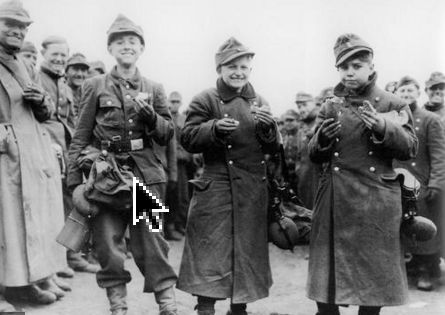
In late April 1945 the SS came to the little village where Janni lived. They gathered up all the boys in the Hitler Youth and marched them to a small wood near the village. From the bunker they uncovered in the wood they issued the boys with brand new factory-fresh machine guns and rifles, grenades, bullet belts, helmets, knives, anything and everything that they could carry.

The SS told the boys that the Americans would be in the village within half an hour. They told the boys that the village had to be defended to the last bullet. For the Fatherland. For the Hitler Youth. For Germany. For the future. For civilisation.

They told the boys they had to go now. They left for Switzerland.

The boys carried their new weapons back down to the village. On the way they met their schoolmaster in the lane. He was the head of the Hitler Youth troop in the village.

He beat them up. He made them throw all their guns in the ditch and sent them home, crying.

The Americans arrived less than half an hour later. They were ready to shoot the entire village if anything had started. Thanks to an unknown man long ago, those boys lived for the future. For civilisation. For an unbelievably better Germany.

Not everybody followed orders, whatever the television tells you. Not everybody at all.

So happy anniversary, Janni, wherever you are.  I wish I knew your name.


Share Button
Follow on Feedly