Janni Schenck

I’ve been working on a story. It’s been in my head for two years, but that’s not true. It’s been in my head since I don’t know. 1997 or ’98 maybe, when I went into a pub one summer afternoon and found an old man arguing with a skinhead. The pub was close to a Rudolf Steiner school.

HitlerYouthKnife
                What more could a 13 year-old boy want?


“Look!” I said wittily to the woman I was with, nodding at the white-haired, distinguished-looking old man. “It’s Rudolf Steiner.” She was kind enough to smile a little, but the afternoon got much stranger faster then. I heard the words “Hitler Youth” and thought I was witnessing a hate-crime. I thought the skinhead was saying how great the Hitler Youth were.

Then  I noticed he wasn’t a skinhead, really. Just one of the people who don’t seem to have any hair these days. I think it’s the food they eat. Whatever it was, he didn’t have any hair. But he didn’t have any bluebird of freedom tattoos either. And it wasn’t him saying how great the Hitler Youth were, but the aristocratic old man with white hair next to him. The skinhead who wasn’t called the old man a Nazi and that’s when it kicked off. The old man said at some volume that he wasn’t a Nazi, he was in the Hitler Youth. And, he said, it was great.

You got flags to wave, songs to sing, camp to go to, something to be a part of. And more than this, at thirteen you got to shoot a real pistol and throw real grenades. When I was a boy half his age at thirteen, or maybe a little older, a Dutch woman who lived at the end of our road told me about firing the Colt automatic. She said “It kicked like a mule.” She was loud and a bit fat and they’d built an extension on their house and seemed to own the local shop. I didn’t know she’d once been hungry. I didn’t know around 30,000 people in Holland starved to death.
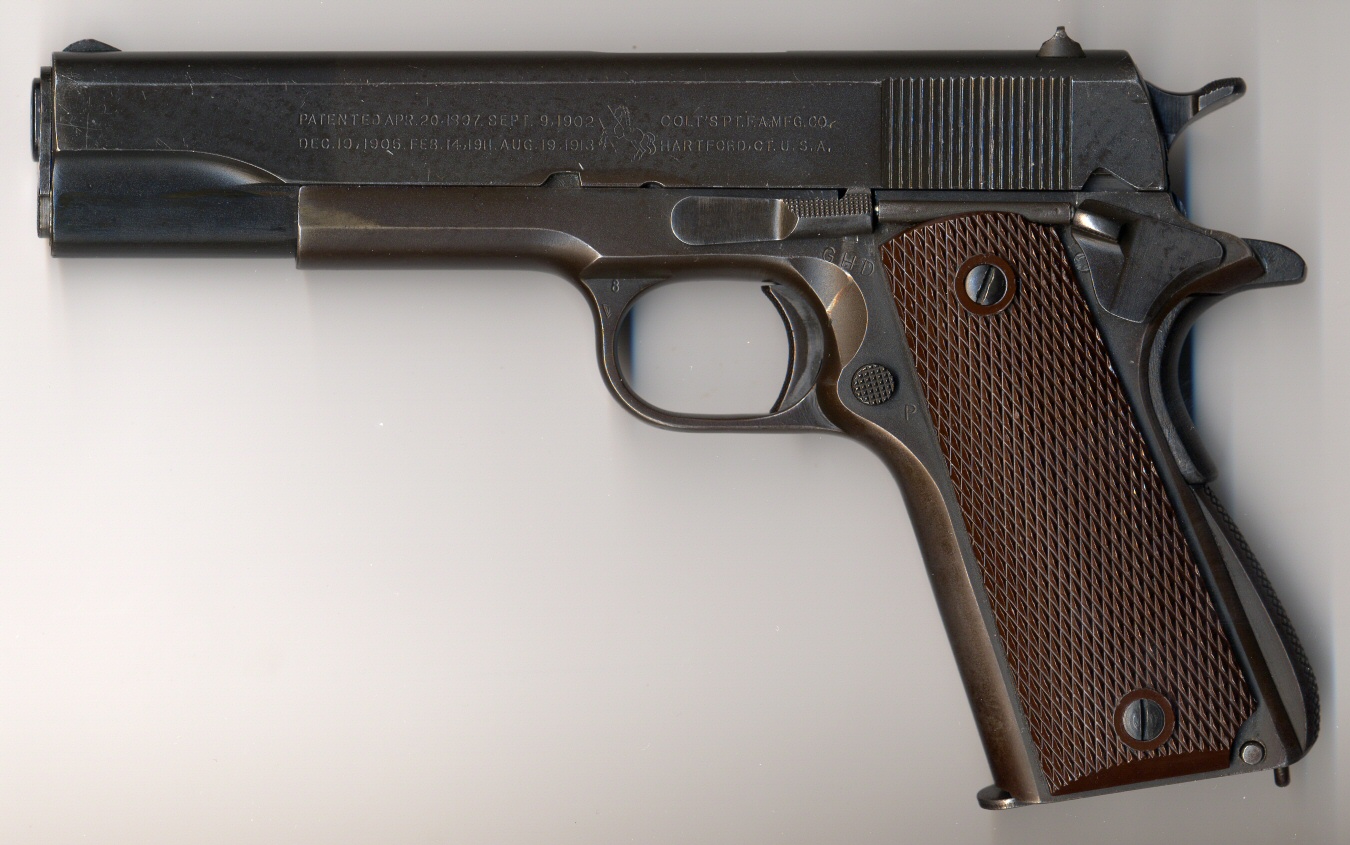
A present from the Netherlands.
A present from the Netherlands, a long time ago.

She had an odd accent I thought, but it was just a Dutch accent told to a small boy in Wiltshire who hadn’t been anywhere apart from Somerset. I didn’t know so many things then. I didn’t know, for example, that if she’d been caught by the German occupying forces anywhere near what was obviously a pistol for the Resistance dropped into Holland then she would have been shot, but probably not before she’d been made to tell the names of everyone she knew who knew about the gun as well. The alternative scenario – Allied soldiers took her shooting with a pistol because that’s how you’d entertain a girl around twenty whose country you just liberated. Sure it is.

I didn’t know too that as the old man told anyone who would listen, every German boy was conscripted into the Hitler Youth at the age of thirteen. Exactly the same way that at eighteen, boys were conscripted into the army. And apart, presumably, from the freezing cold nights manning anti-aircraft guns waiting for the mile-long streams of RAF bombers, it was mostly fun. Apart from the last day of the war, when the Americans came to the village.

The SS turned up first, in a jeep of some kind. They told the boys they had to defend the Fatherland and kitted them out with brand-new guns and steel helmets and grenades from a bunker in a field, that nobody knew was there. Years later I heard that the best way to hide something is simply to dig a hole and put the thing into it, with a sign saying ‘MoD – Keep Out’. Or ‘Water Company.’ It works in countries where order is an important thing. The boys made their way down towards their village again and the SS realised they had an important appointment somewhere else more urgently, coincidentally on the way to Switzerland, and left. The schoolmaster in the little village met the boys on their way to fight the Americans. He was the head of the Hitler Youth.

He beat the boys up, made them throw all the guns in the ditch and sent them home. The Americans arrived about an hour later. The old man said they would have shot everyone in the village if there was any resistance.

It’s stuck in my head. It asks so many questions. And now I’ve written it. It’s called Janni Schenck.  It’s very nearly a true story. I can’t speak without gabbling. I’ve been ill and I’ve just slept for a couple of hours accidentally, fully dressed, instead of going out as I was going to do. But I’ve done it. I’ve got to buy some paper tomorrow and proof read it, because I can’t proof on-screen,  but tomorrow is another day. I’ve done it. And I didn’t think I could.

 

Share Button

The way we weren’t

I was born if not in a cross-fire hurricane, then certainly not in a Hawker Hurricane either. Although thanks to Airfix kits, I knew enough about them to kid most people along.

hurricaneFlying, or the idea of it anyway, fascinated me when I was a boy. All this were fields, an’all, but that’s another story as equally true and/or plausible. I was about to say I didn’t get on an aeroplane, as we called them in my house, until I was nineteen, but it wouldn’t be true. Somewhere there’s a picture of me aged about four, wearing a tweed coat (oh because people did in those days, all right?) and somewhat improbably, a modern pilot’s helmet, sitting in the front seat of an English Electric Lighting. One of the only things I share with Jeremy Clarkson is a admiration for the Lightning.  Someone I used to know got a ride in a Russian Foxbat about twelve years ago. She said it wasn’t like flying. Not like flying out of Heathrow or Gatwick, anyway. She said it got off the ground, got to the end of the runway then sat back on its haunches and went straight up. The same as the Lightning was designed to do, get to 36,000 feet in three minutes in 1959. It topped-out at 87,000 feet, deep into the edge of space. Think about that for a moment.

I've sat in one of these. Straight up. Although not to 87,000 feet.
I’ve sat in one of these. Straight up. Although not to 87,000 feet.

Obviously the RAF scrapped the Lightning and bought American Phantoms, which above all else, were American. The idea of an independent defence capability was a joke even then, before anyone even mentioned Trident. Aged four, I didn’t know any of this. I just loved aeroplanes.

Maybe it was my father. As a professional liar he’d claimed he’d been a pilot when it turned out that in fact, he’d been the bloke who put air in the tyres and started the engines up. He watched black and white documentaries in the middle of the night. Once he got me out of bed to make me watch something about the Blitz. Forty thousand British people died from bombing in World War Two. About the same number of Germans died in three days in Hamburg and Dresden, but nobody even mentioned that, then.

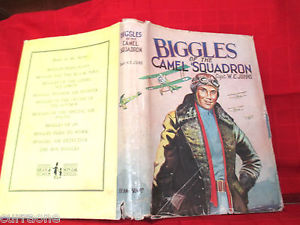
Where is this going? I wish I knew. Tangentially around a picture I bought in Bath a couple of weekends ago. It spoke to me of my childhood, or my early teens anyway, when I discovered Captain W.E. Johns and his heroic creation, Biggles. I read them obsessively, especially the First World War stories. They had something about them I’d never read before; it was years before I knew why they were so powerful.

biggles

Firstly, although obviously any mortal man having as many adventures as Biggles would have been dead before he’d done half of them or even a quarter, Johns had been a fighter pilot himself, in France. He knew what he was writing about. This Biggles drank, got in fights with other pilots, loved, shot and killed people, crashed, got cold, got tired and displayed what now are so very obviously classic PTSD symptoms. Only later when the magazine articles had proved wildly popular Biggles’ diction changed and he switched from Scotch to lemonade at the insistence of John’s publishers and agents, to widen the market to schoolboys.

But Biggles of the Camel Squadron and Biggles of 266 are the original, first attempts. And while they’re polished, perfect little short stories with a beginning, a middle and an end, they’re also very raw. When pilots die in these stories, there’s no doubt but that they’re dead and little or no talk of glory or a purpose in their deaths. I’d never, ever read about a man crying when another man had been killed before; to this day it surprises me that the first place I read this was in a Biggles book. The shock was real; I didn’t know men did this.

I didn’t know men wrote about it either. It was a different world, a long way from my father’s fantasies of flight, a long way from the Wiltshire village I grew up in. But then as now, the past is a different country. They do things differently there.

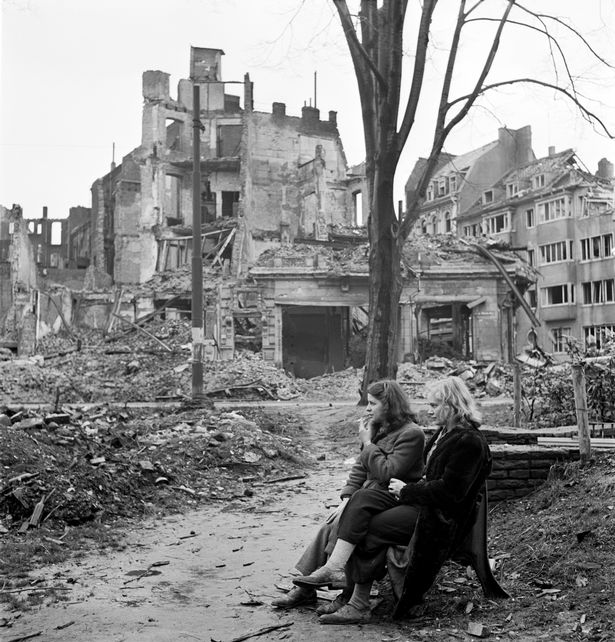
Koln 1945

Share Button

China in my hands

Dear Chinese people,

Even  though it’s written in English, even though most of you won’t be able to read it, please read this open letter to you all.

I know you don’t give a stuff about human rights or copyright protection or executing people for looking funny at Chairman Mao’s poster. I know you don’t give a stuff about child labour or employee safety or seemingly anything much at all, except having everything every which way in your Communist-controlled capitalist exemplar of a state. I blame Nixon, personally. He was the man who transformed China from where? to the country that bankrolls the West and fills its shops with the plastic tat that passes for the good life, notwithstanding that the West gave it the money to do that in the first place.

But that’s not my letter. My letter is really, really short. Just four words, really.

What do you want?

That’s it. It’s really easy. Well, it probably is for you, but I’d dearly like to know the answer. You see, this blog, if that’s what it is, sort of gets an ok-ish number of visits. For what it is, at least. But half of them are from you. In China. And I don’t understand that.

It makes no sense.
It makes no sense.


Every time I post anything, within seconds, half the views are from China. What is it about my stuff? I mean, I don’t even write anything about China. Germany, yes. Mythic Britain, quite a lot, as in the Britain in my head. France a bit. America sometimes. China not at all.

I would say you’re very welcome, but you’re actually not. I don’t know anyone in China. I went to Hong Kong once, for three days thirteen years ago and memorable as I am, I don’t think anyone in the Mandarin Orient got so fond of me they follow my blog, honestly. So it’s spyware of some kind. Something automatic. Not a real person. Watching my posts. For what? For something it can use, is the obvious, the only plausible answer. So if it’s all the same to you, please don’t. Stealing is bad manners where I come from.


Share Button

When I was dying

It’s ok, I’m not any more. It’s just a cold. But the not-all-thereness, the distanced wooliness, the feeling that I-could-physically-but-I’m-just-so-very-tired, the feeling of slowly leaving something I’ve got now that I’ve got what is obvious even to me is nothing more than a cold and a slew of self-manufactured neuro-toxins sloshing around inside me as my body tries to find somewhere to put the dead cells that fell in the Great War against some crappy cold virus.

I get about one cold a year these days. I used to get them a lot when I was a kid. I used to ask myself what the point of cold viruses was, wondering if I died the virus would die and so wondering what the point of it was. Luckily for my first foray into existentialism I didn’t know the cold virus would probably be fine thanks, longer than my cooling corpse would, anyway. I’m not sure these colds weren’t something else, some manifestation of needing to be noticed, but whatever they were, that wet-hankied, sore-nosed, always cold condensation-on-the-car-windows in a grey West Country car park while the wind sheared through my rubbish Co-op parka if I stepped outside is one of the primary memories of my childhood. I don’t miss not having colds at all. I don’t much miss being a kid, either.

I got this one because I was over-tired and in the company of people who didn’t know what a handkerchief was. All day one day I had pains all the way up the back of my legs, into my waist, for no reason I could work out. Now just the remains of the cough, the watering eyes and the terrible distance between me and everything else.

It was like that when I was dying. I don’t know when it started. In the womb, maybe, or at least the stage was set there, as it always is. My iliac vein curled around my femoral artery, in front of my spine before I was born. When I went on long-distance airplanes, as I did from the age of nineteen, and again when I was twenty-four, then again, then now and again on holidays, then a lot in my early forties, the air pressure allowed the artery to expand to about five times its normal size. I know. I can make it do it. I’ve watched it on a monitor in the ultimate real-time bio-feedback experiment my surgeon made me do.

The vein was clamped against my spine and because blood clots when it isn’t flowing, that’s what happened. I had at least five deep-vein thromboses, or possibly three Guinness Book of Records ones. Nobody is really sure, nor when exactly they happened. All but the first were preventable. The fact that they took four years off my life, drudging through at a distance, the colours of everything fading, feeling that I was slowly dying for the simple reason that I was, was entirely down to my local doctor’s surgery.

My GP had no idea what was wrong with me. He, then she, then he again tried to find DVT by feeling my leg, found nothing and concluded there was nothing wrong with me. Most of the time there wasn’t. I was cold almost all the time even in summer and I didn’t want to move much. I bought a bicycle and enjoyed going out in the lanes after work, but after the first winter it wasn’t much fun.  I found myself one December in a soaking, freezing field I couldn’t find my way out of, my feet soaked, my leg aching in a way I couldn’t understand and no hope of ever being anywhere else but cold and hurting under a grey sky. Occasionally I’d simply double up with pain, dropped to my knees vomiting. I vomited unpredictably, on three continents, leaving a sour trail of hopelessness wherever my ticket took me. Ten minutes later there would be no pain at all. I wondered if I was losing my mind. There were no lumps, no skin discolouration, nothing. I was just dying.

I’d had a relationship go wrong in a way that was entirely predictable it would. I thought I was just sad about that and this was what it was like getting older. You move about less. You feel the cold. Everybody in my family did.

From here, everything about this screams how obvious it was what was wrong with me. My childhood memories are full of blocky men in armchairs who it hurt to move, coal-fires blazing in mid-summer, living-rooms heated almost to suffocation-point. Every one of them I think now had exactly the same thing I did, iliac DVT, congenitally. They all wore fixed smiles. They dealt with it differently to me.

I didn’t die, no thanks to my local doctor (and Leiston Surgery, please feel free to take a bow at any time). But it was odd and interesting to hear a friend use exactly the same phrase about the time she had pneumonia and thought she had something else: “When I was dying….”

We neither of us said it for sympathy or a hug or maybe, if nobody minds, you know, something else maybe. Just a fact, along with the odd realisation that this was real, that we had both had the same experience, that we’d both known what was going to happen and the fact that it didn’t wasn’t really much to do with us at all. But when we were dying somehow we didn’t. Something slipped away, but it wasn’t us. Some time again it would be, we both knew that. But not yet awhile. Not yet. It’s just a cold, this time.


Share Button

Repurposing

I’m doing some new things recently. New to me, anyway. But one of the things I’m doing I’ve done before and it still gladdens me every time I do it.

That Haile Sellassie lived here, you know.

Bath on a Saturday morning, Walcot Street in the mist rising off the river flowing alongside it. OK, it’s changed. There are no coke stoves or dogs on a piece of strong, nobody claiming to be a carpenter because he can join two bits of ply at right angles (but interestingly, according to a conversation I overheard at the flea market, still not-really-antiques that can be spotted by the injudicious use of Posidrive screws). No Hat and Feathers, no Mad Carol, no Lucy in a jumpsuit, no car radios unexpectedly for sale, nor smoke billowing out of them when the vendor wired them up backwards on a 12 volt car battery or a whole host of other things that used to be. Luckily, no-one lighting a fire to keep themselves warm in the car park now where the cattle market used to be, either.

The past is another country. They do things differently there. But where would places like Bath be if they forgot their past? As the song from Whatever Happened To The Likely Lads told us, it’s the only thing to look forward to.

But some of it’s still there. I was there this Saturday. I was going to climb Beechen Cliff, but the mist was still down and there was no point, so I walked up past the Abbey. The first thing I saw was a 1930s print, some Boy’s Own illustrated tale of pilots, back in the days when aeroplanes were called that and had four wings and two propellers, when bounders wore bow ties and only sailors wore beards. £10 well-spent. I had promised myself I wasn’t buying anything, but then I remembered the time in Oxford on another Saturday morning when for another £10 I turned down the chance of buying what I’m pretty sure was an original artwork that illustrated a Biggles book. A chat and a little recollection of old times with the woman in a fur coat on the stall that chilly morning, two steps away from a jumper exactly like the one I’d had in mind and thought was going to be about £200 so I wasn’t having that this winter. Except someone else had worn it, apparently for about ten minutes, so that saved £190.

Just around the corner, back up on the street and I found a kettle. I’m not really a copper kettle sort of person, but I have this boat. OK, it isn’t in the water and the chances of it getting in the water look slimmer each week this year, but I can still go and sit inside it and drink tea. Or at least I could if I had a kettle. But I don’t want to get Alzheimer’s from some horrible aluminium thing and I don’t want a shiny brand new piece of German design (well ok, I do, a lot, but it wouldn’t look right on the boat) so I was stuck. Until I went into the charity shop and found it.

IMG_3141
As it was. I think it’s 1950s.

A couple of minutes with some Brasso and rubber gloves and it polished up a treat and no error gorblimey guvnor. It looks great and fits right into the wooden boat vibe that goes on in a wooden boat, surprisingly.

A print, a jumper and a nice kettle, all for £30. But more than that, being part of it again, Bath on an autumn Saturday morning.

IMG_3142
Not long after. It’ll do, I think.

Those who’ve read this stuff before will know I went to university here. I grew up  here (discuss, with reference to some laughably inappropriate partner choices which would have been more laughable if they’d happened to somebody else, I think), or at least, twelve miles away. When I was about eight my father used to take me to Bath early on Saturday mornings. I was so excited about this I used to try to sleep in my clothes because I had to get up so early. It never worked – I could never sleep like that. But we still went to Bath. The market I sat in is still there. I bought some cheese there this time, rather more than half my life away. I wrote a poem I was going to call that, but it got called something else instead. Wrongly, I think now. And there, as some people know, lies another tale, from and for another time.

Share Button

Because I said so

This morning two things were reported which ought to scare you senseless.

The Defence Minister whose idea of defence includes blowing people up in foreign countries any time he feels like it said he’s fine with that. The RAF launched a drone, a big explodey model airplane and controlled it from Lincolnshire.

It killed two British people in Syria. According to the Prime Minister they’d been going to threaten our way of life. Again. Before he collected himself the Prime Minister said they’d been going to kill the Queen. So far as I remember in the tabloids they were going to do that the other weekend as well. Then he used the magic word:

“Such actions are required to prevent a terrorist attack.”

He didn’t once use the phrase extra-judicial murder, which was odd. The plaintiff “We have to work extremely hard” just sounded a bit pathetic tagged on the end.

It’s terrorism though, you see? The Attorney General said it was ok and if he wants to keep his very nicely paid job and pension then as every previous one, he’d better. So it’s ok to fly an airplane somewhere and blow people up. You don’t need a trial or any of that old nonsense. You can just go and kill them. It’s fine. Because terrorism.

The final solution

As Michael Fallon said, there was ‘no other way’ to deal with people accused of terrorism. After all, we’ve tried all that arresting people and putting them on trial and witnesses and burden of proof and all that he said but she said and ah-yes-but-m’lud and frankly, where does it get you? Maybe Rebeka Brooks can tell David Cameron some time.

Seconds later on BBC Radio 4’s one o’clock news today we were told a 28 year-old policeman had been arrested along with several others for conspiracy to pervert the cause of justice. That’s serious. You can go to jail for life.

THAW
Just because his lapels are like that doesn’t make it not scary.

For reasons which were never made clear, as Hunter Thompson used to say, the Birmingham policeman had made-up a story. Which sadly isn’t totally unknown among police officers as any cursory viewing of the Sweeney will tell the impartial observer. But this story was different.

This story was that terrorists had been going to kidnap a police officer. Except there weren’t any terrorists. It was all made-up.

Do you see a problem yet? Maybe you should. Because now you don’t need proof to go and kill people any more. Just someone’s say so. For example, a lying policeman’s word on it.

If you’re ok with this kind of drone strike it’s probably best if you don’t even look at people the wrong way in future. The party of conservatism is taking us a long, long way from Dixon of Dock Green. Mind how you go.

Share Button

Sins of omission

In the Catholic church there are two kinds of sin. Sins of commission cover off the things you did and oughtn’t to have done. The sins of omission are briefly, everything else. Specifically, the things you ought to have done and didn’t. Which as a get-out-of-that clause is comprehensive to the extent that you have to wonder if insurance policies are the ultimate proof of a Divine plan.

Every bad thing is a sin. Even some good things are sins if you do them for bad reasons. Probably. I’m not too clear on this. But things you might think are good are almost certainly sins, or one kind or another. But it’s the ones of omission that are the real Gotchas. You don’t get away with saying ah yes, but I didn’t do it. Because that’s the whole point. No, says God. You didn’t, did you? Get out of that.

The biggest one I ever experienced was a lie. It happened in Israel, a long time ago. It altered the entire way I think about the place and the people who live there. The ones I knew told lies. They lied habitually, as a first response to anything. They lied about being able to borrow a car whenever you felt like it, which I was told would be happening before I even left England. They lied about the pigs they kept on the kibbutz. They kept the pigs on wooden pallets so their feet, or more specifically their cloven hooves didn’t walk upon the earth, to make it ok with God to eat bacon. Which we did more than once while I was there, but as the pigs were called turkeys it didn’t matter. The sad part is I’m not making any of this up. This happened, it was lied about and everyone seemed completely happy with the arrangement.

As they were the night we got machine-gunned. There were quite a few lies and sins of ommission that night, as well as some committed too, given we were all in our teens and early twenties and away from home and it was a warm night. I wasn’t committing any sins myself, you understand. Not that night anyway.

It was probably about 1am when those who were asleep were woken by a burst of automatic gunfire. I’d grown up near Warminster, the army officer training base in England, well within hearing distance of the gunnery ranges on Salisbury Plain. I shot every Thursday night at a local club. I knew what gunfire sounded like. And everybody who hadn’t had heard it on television anyway. Being young and stupid we all piled out of our beds and wandered outside to see what was going on, which looking back, isn’t the best response to a terrorist attack. We were lit up by bright lights floating down out of the sky; parachute flares shot off to spot the incoming invaders on kibbutz Revivim, which always saw itself as the front line, not least because it was one of the southernmost kibbutzim but also because it was Golda Mier’s kibbutz for a while. Some of us wondered if we were going to get shot. More of us just watched the girls in their underwear, softly lit in the pink and white glow of the descending lights.

After a couple of minutes of this an older man from the kibbutz turned up carrying an Uzi submachine gun. He got everyone out of their huts and marched us all off to the tennis court, where what we thought was a toolshed turned out to be the top of a set of stairs leading down to a brick-built shelter underground. So we sat there. Someone asked what was going on. Were we under attack?

No. Ok, so what’s going on?

Nothing was going on. It’s just a precaution.

Against what?

Nothing.

And that was final. Nothing was happening. Nothing had happened. Nobody had heard any gunfire. We must have imagined it. Nobody had shot off any parachute flares. We must have imagined those too. Whatever they were, which they weren’t, because nothing had happened. None of which explained why we were sitting in a bomb-shelter under the tennis court, which we didn’t even know existed yesterday evening.

It took about two weeks to worm the explanation out of several different people. Because it always thought of itself as a frontier kibbutz, they used to use fifteen year olds to guard it every night. They gave them all an Uzi and a bicycle. What could possibly go wrong?

There isn’t much happening on a kibbutz at night. Nothing that needs a submachine gun, anyway. So if you’re fifteen and standing under a palm tree you get bored. But they’ve given you this 9mm gun, just like your heroes. Just like in the movies. You could, I don’t know. Take the magazine out and put it in again. Unfold the stock then fold it up a couple of times. Slide the bolt back just enough to see if there’s a bullet shining in the chamber. Or .. I know! Check to see if the safety is on by pulling the trigger.

Not by looking at the indicator on the side. Not by feeling which way the lever’s pointing with your thumb. Not even by holding the gun without your hand on the grip, where there’s another safety which has to be depressed, so the gun won’t fire if you snag the trigger on a branch or something. No. By holding it cocked and pulling the trigger, like a bored fifteen year old who some idiot gave a submachine gun.

Different person, same gun. Exactly what a bored 15 year-old needs.
                  Different person, same gun. Exactly what a bored 15 year-old needs.

Which obviously never happened, because like the turkeys with curly tails, there was one version of the truth on kibbutz Revivim, and that was whatever the kibbutz council said it was. Anything else didn’t happen. And anyone who said it did was an enemy of the kibbutz, so they must be lying anyway. That’s what enemies do.

I lived like this for three months. I have no intention of ever going back.

Over twenty years after I’d banged the dust of Revivim off my boots someone invented Google Earth. I looked-up the kibbutz, just to see how it had changed. The map showed me the names of two Arab villages I’d never known were there for the simple reason that they weren’t. There was no trace on the ground that there had ever been people living in houses where the peach groves were now. It was called the nakba, and it’s something else that didn’t happen. The villages aren’t there on Google Earth any more. We’re not even allowed to see the names of them any more, as if they were never there at all. I emailed Google to ask why they were obliterating history, when they’d used the names in the first place. They emailed back to tell me my comments weren’t helpful. I’m glad they weren’t. I don’t want to help Google tell lies.

The nakba is where Palestinian refugees come from, the ones who were such a threat to Israel in the 1980s that it was fine to bomb them or drive a tank through their tents on the BBC News most nights without a single word of explanation about how or why or when all these refugees had suddenly materialised out of nowhere.

Except refugees don’t.  They exist because of people’s deliberate actions. And pretending they’re just one of those things, or some kind of natural event, nobody’s to blame, nobody is responsible and hey, they’re economic migrants anyway, because nobody was trying to kill them except when they were, trying to blot them out of nice people’s history is a huge sin, whichever religion you believe in. Including none.


Share Button

You’ll never forget

A couple of weeks ago a man flew an airplane at an airshow, which wasn’t unusual in itself. Sadly for the pilot and  the eleven people dead so far, the plane crashed. A lot of people seem to think that’s quite unusual too, but it isn’t.

Airshow crashes happen quite a lot. Right back as far as 1911, just a few years after airplanes started flying, there was an airshow crash just like the Shoreham one. You can read the details on Wikipedia if you wish.

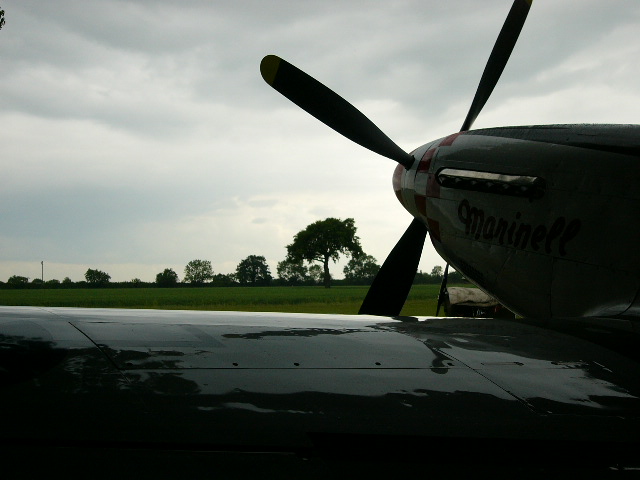
At Shoreham, the plane looped, then went into the ground. It happened in Suffolk too, at the little airfield just down the road from me. It was flown by a man called Lt. Otto Jenkins, known to his friends as Dittie. He was killed on 24th March 1945. I was told the story by a man who saw it happen, who’d seen the aircraft fly past at about 20 feet, saw it clip the tree and go straight into the field, where it exploded and burned. There was quite a crowd that day too. Lt Jenkins had told people to watch.

He’d just completed his last mission over Germany. He was going home. When he got back to Leiston airfield he said his last words on earth, over the radio. “I’ll show you flying you’ll never forget.”

He took his Mustang down to get the speed up then looped it, going up and over in a complete circle. Then he decided to go it again, straightaway. According to the mechanics watching, they could hear something wasn’t right. They said it was ‘mushing’ as it went round the second time, trying to press itself out of the loop, skidding downwards out of the circle. There just wasn’t enough speed to make it happen twice.

I met a woman whose aunt dated him, or said she did. He was married, according to the old pilot who told me about it. We went to look for the tree. It was smaller then, but it’s still there. Oak trees are tough stuff.L1000340

Lt Jenkins got through several aircraft in the few months he was flying. After the custom of the time he’d named them, first Floogie, then Floogie II, then Toolin’ Fool. then Toolin’ Fool’s Revenge. The pilot who inherited Floogie II. Lt Schlieker, was killed later. He crashed near Butley church, nearby. He was in formation when his flight of four aircraft climbed into the clouds. That was the last anyone ever saw of him. He was identified by a name tag on his shirt. Bad weather and accidents killed more pilots on that airfield than the Luftwaffe ever did.

A badger track leads across the field exactly where there used to be a path the pilots used, but there’s no plank over the ditch any more. The Officer’s Club he watched the show from isn’t there either, and where the Mustang screamed past the huts now it would be flying through a hedge and 70 years of brush that’s grown up since the airmen went home. Not Lt Jenkins. But maybe he was right, somehow. Not everyone’s forgotten his flying.


Share Button

At the point of demand

I had a health scare last week. There was nothing wrong with me. But there had been once, ten years ago this year. And frankly, I was scared.

I was also in pain. Intermittently. This was the main problem. The thing I had had sent waves of pain through me. Not just like shutting your hand in a door, although that’s painful enough. I’m not a notably small person and I’m talking about the kind of pain that drops you to your knees mid-stride, vomiting. It wasn’t a stomach thing. I guessed that was just part of an extreme fight:flight reflex. We’ve all advanced such a long way, haven’t we? Apparently not when the chips are down. Or coming back up again as in this case.

The thing is, when five minutes later apart from doubting your own sanity there’s nothing much wrong with you at all, it’s quite hard to get a doctor to take you seriously. Or at least, the doctor’s surgery I went to, the one where I was told “if you can cycle 20 miles there’s nothing much wrong with you.”

L1000647
                                                                              Actually, no.

Well, there was. That ‘advice’ very nearly killed me. The doctor was trying to avoid doing a blood test that would have cost about 80p. It has a reputation for providing false positives, which means that sometimes it will tell you that you have something when you don’t. The up side is that if the test says you don’t have the thing it’s testing for then you really, really don’t. And obviously, terms and conditions apply. Nothing is 100% accurate. Not even me.

It was DVT, or deep vein thrombosis back then. It happened when I was flying long-haul a lot and my blood clotted too much and blocked a vein. Which hurts if it’s a big vein, which it was. It isn’t the vein that’s painful but the things around it which hurt, I think. I don’t think there’s anything veins are made of that can feel anything much. I felt cold and slow and old and as if I was dying, which thanks to my doctor’s desire for an easy life and saving 80p, I was. It was no thanks to her that I didn’t. Instead I woke up one morning a decade ago with one leg nearly twice the size of the other and raspberry coloured, after three nights of terrifying dreams. Even my useless GP had to admit there was something wrong then, the way I’d been saying there was for three years. When I wasn’t dropped to my knees vomiting in pain.

Then a brilliant surgeon asked me if I’d like to be in his experiment, which having seen Marathon Man I wasn’t totally keen on. So he offered me a choice. Be part of my experiment. Or go on Warfarin anti-coagulant, so your blood flows more easily because it’s going to be made thinner. The snag being that it’s a cumulative drug, varying the dosage doesn’t work immediately and it’s easy to over or undershoot, so you’ll need a weekly blood-test. And after ten years you’ll probably haemorrhage spontaneously and that will be pretty much splashily that.

Pretty much like that, only smaller.
                            Pretty much like that, only smaller.

It wasn’t a difficult choice, really. I became the third person in the UK to have an iliac stent. If you remember Slinkies, think of one six inches long and just a few millimetres wide. Now think of it stuck inside your iliac vein. That’s the big one that gets the blood up out of your left leg, crosses over your spine and takes it to your lung. Which is why an iliac DVT is somewhat problematic.

If the blood clot breaks up and moves to your lung you’ll have a pulmonary embolism. Which can kill you. If it keeps moving it’ll go through your heart and probably block the artery on the way out, so your heart will literally explode as it keeps pumping blood into a blocked tube. Which can, obviously enough, kill you. Or it might keep going and lodge in your brain, when you’ll have a stroke and not be able to speak and have to learn how to eat again but with a spoon this time unless you’re already dead, which might be preferable. It wasn’t all that much fun, any of this. I think it was worth spending 80p on a blood test. My previous GP didn’t.

An hour of surgery under local anaesthetic. I watched the whole thing live on TV. That was stupid. Even the surgeon said so, afterwards. More nightmares, for two weeks. But in a thousand years when my grave is excavated on Time Team the only thing left will be the stent gleaming in the bottom of a pit. There is no way my iliac vein will be blocked there ever again unless I’m hit by a steamroller, in which case it will be an inconvenient day anyway.

Some people live with near-constant discomfort from stents, I was warned. My surgeon told me that might happen, or it might be only when I’m really tired. Which is what happened the day before yesterday but I didn’t know if it was that or the whole thing starting again.

So I went for a blood test at a new, different GP surgery. I don’t understand the talk about waiting lists. I phoned up and got an appointment ten minutes after the surgery was closed. The woman on Reception said it was ‘urgent.’ I drove over and gave a blood sample. Four and a bit hours later they called me on my mobile. Clear. I don’t have DVT.

I do need to sort my sleep out and I think a lot of that is simply bad sleeping habits. Like doing Facebook in bed, for example.

I’m lucky enough to live in a country where I can get health care like this. Most of my ancestors ended-up dead from DVT. OK, everyone ends-up dead sooner or later, but it’s not a quick or painless way to go. Luckier still, this kind of health-care is free. Still, after everything.

It doesn’t matter how rubbish you think politics is, or how much you want to pretend ‘they’re all the same’ or it doesn’t make any difference if you vote or not. Because it does. The National Health Service, free at the point of demand, is probably the greatest single achievement ever made in this country. It’s benefitted more people more fundamentally that anything else. And it came about precisely because politicians are not all the same. And because people didn’t try to justify their inaction with a self-fulfilling script about their own irrelevance.


Share Button

My digital legacy

I saw a Tweet today from a law firm, quite sensibly asking people if they didn’t have a will, what did they think was going to happen to their digital legacy when they died?

I don’t have any next of kin to leave things to but it set me wondering what kind of digital legacy they really meant. I invented some software once. Well, twice, to be honest. The first one got stymied by a “Top Six” firm of accountants, whose Watford branch was absolutely no help raising VC money AT ALL, for all their ‘we can get you a million’ hot air. Much like Tony Blair, the person in charge of the project didn’t really do email. And yes, that’s exactly what they said. To both things. As someone more sensible than me pointed out, the Top Six is a very, very different thing to the Top Five.

Then a tech crash and the dawning realisation that these provincial accountants had no more real access to that kind of money than I did and relied on going round asking people if they’d like to invest in something. Which I could have done myself. The other was a bit more successful, and would be today if the company who were buying it hadn’t been bought and then bought again and re-structured and moved and all the associated disruption that goes with that. Still. Don’t look back in anger and all that. And relax.

I made a Moodle website for Chalmers University in Sweden, the first one they had. Does that count?

What?

I don’t just sit here writing this stuff, you know. Although some days it feels like that. Maybe this is the kind of digital legacy they were talking about. I hope so. Because otherwise we’re going to have to consider who I bequeath my collection of Tweets about Kate Bush and New Labour to. My Facebook posts of videos of Wendy James.

I mean, really? Surely people could go and look at You Tube themselves. If not at Wendy James. I saw her down Portobello you know. She was sitting on a wooden pallet, I was selling Georgian tea caddies…. oh, you don’t need to know the rest, do you? Really?

Digital legacy, d’you see. You lucky people.

Share Button
Follow on Feedly