Of the future

Over a hundred people have been killed in an attack in Paris. L1000700

Predictably, there are immediate calls to bomb somewhere. Anywhere. Syria. That’s this week’s country that ‘they’ come from. Before that it was supposed to be Iraq and before that it was supposed to be Afghanistan. Both times we invaded the country. We bombed it. Somehow, they keep on coming and we pretend we don’t know why.

Bombing is what we do best. It won the Second World War. It is also precisely and utterly and completely useless as a response to asymmetric threats – ones where the enemy doesn’t conveniently wear a different shaped hat.

The Facts

Allied air power was decisive. Its victory was complete. It brought the economy that sustained the enemy’s armed forces to virtual collapse. It brought home to …people the full impact of modern war with all its horror and suffering. Its imprint will be lasting.

Domination of the air was essential. Without it, attacks on the basic economy of the enemy could not have been delivered in sufficient force and with sufficient freedom to bring effective and lasting results.

The mental reaction of ….people to air attack is significant. Under ruthless control they showed surprising resistance to the terror and hardships of repeated air attack, to the destruction of their homes and belongings and to the conditions under which they were reduced to live. Their morale, their belief in ultimate victory of satisfactory compromise and their confidence in their leaders declined, but they continued to work efficiently as long as the physical means of production remained. The power of a police state over its people cannot be over-emphasised.

The most serious (air) attacks were those which destroyed the industry or service which most indispensably served other industries. Whatever the target system, no indispensible industry was permanently put out of commission by a single attack. Persistent re-attack was necessary.

This was the conclusion of the United States Strategic Bombing Survey, dated September 30, 1945 that I just happened to have about my person, as you do. It was put together by a team of over 1,000 observers, documenting records not just in England and the US, but in smashed German town halls and burned out bunkers. Three of the team were killed getting this information. That’s how close to the front line they operated. They wanted the absolute facts to justify the greatest expenditure on bombing the world had seen.

It was headed up by J K Galbraith. Earlier in the war he had calculated the optimal number of machine guns the B17 bomber should carry to balance the weight of the guns and their ammunition needed to defend the aircraft against the weight of the bombs or fuel the aircraft could carry if it didn’t have any guns at all.

His career was derailed by this report. The  US Army Airforce, struggling to break free of the Army and become an independent organisation (as it did) did not appreciate a report saying that basically, bombing doesn’t work unless you bomb an entire country flat. And even then, the people left will pretty much carry on as normal, as best they can. This was not what the high command wanted to hear. At all.

As it isn’t now. Bombing is a nice, simple solution. It looks good on TV. You can interview Our Brave Boys in their multi-million pound aircraft and talk about knights of the air and evoke the Battle of Britain, as British politicians have already done. And unless you bomb an entire country out of the twentieth century, it’s not going to work. Bombing Syria ignores the fact that a lot of it is already bombed flat. It ignores the fact that the main industry is oil and we certainly are not going to start bombing that. Turkey already buys oil from ISIS, which isn’t something you’ll see in the tabloids a lot, although the story has been in the Financial Times for weeks.

And anyway, we’re supposed to be ‘liberating’ the Syrians, which is quite difficult to do if we’ve killed them all in airstrikes, notwithstanding that last year David Cameron wanted to go to war on the same side as ISIS, who according to Senator Rand Paul and others has been massively helped by the United States government. General Wesley Clerk has gone on record saying that US allies created ISIS. He also said the decision to go to war with Iraq was made because nobody knew what else to do, but they had to look busy.

So some people got killed on what had been a good night out and they will again. They always have. It’s what humans do. It is a total tragedy for everyone involved. The bigger tragedy is we never do anything to stop it happening. Just bomb some more.

The great lesson to be learned in the battered towns of England and the ruined cities of Germany is that the best way to win a war is to prevent it from occurring. That must be the ultimate end to which our best efforts are devoted.

Nobody wanted to hear that then. Nobody wants to hear it now. This is our tragedy, the one that really affects us all.

Share Button

She was a voice on a morning telephone

That’s how I wanted it to start. The story I never wrote, maybe because someone had already written it and it was called Maybe I’ll Come Home In The Spring, or it could have been called Two Lane Blacktop, or it could have been Jeff Buckley singing Leonard Cohen’s Hallelujah, or a 17 year-old’s winter afternoon at the Cross Keys and the Red Lion and what from here looks like a phantom cavalcade of BSA A10s and Vauxhall Vivas, a Renault 5, a Bonneville Triton, a couple of Minis and A-roads that killed people back then.

We knew where the crashes had been, the place where the car burned, the turning the car had come out of in front of the lorry, the spot where the road was covered in Maltesers one morning going to school, Star’s field, the dead cats by the road now and then, half something to feel sorry for, half something to be afraid of. The sports field where the flower show was every year, where the puffball mushrooms grew, where we kicked them thinking they were poison, the tiny muddy medieval lane stiled with stones each end where adder berries grew shining red against the grass. The place I grew up. The place I’m still from, even though I can never go back there because it isn’t there.

Sometimes I can still feel that mood,almost. The hope. The passing show. A girl called Emma – and there were lots of girls called Emma and Sally and Sandy and Wendy in those days, where I was, where I lived – once said it:  “All of the best times are sad. You know that.” And I sort of did, even then.

And sad because although they’ll always be with you, these memories of all of us driving from one pub to another, girls riding pillion with their blond hair streaming a foot behind them in the 70mph slipstream of that winter afternoon, the smell of hot oil violent against the smell of cold fields, although we’ll always have that, those of us still alive and maybe for all I know the others too, that’s the rub. We’ll always have that. And although the Red Lion’s shut now the last decade and a half, it’s not that. We can’t go back because we can’t go back.

All of the best times are sad. We knew that.

Share Button

Hanging on the new barbed wire

It’s Rememberance Sunday. The Prime Minister has gone to the Cenotaph and done his very best SadFace, even if being David Cameron he looks like an eight year old who can’t tell Nanny he needs a new dog because he wasn’t supposed to set light to the old one in the first place.

Without the slightest sense of irony the BBC are happily broadcasting stories explaining why we have to invade Syria despite the fact that hardly anyone can even point to it on a map without names on it because as usual, “they” are threatening to destroy ‘our way of life.’ Unlike say, a Home Secretary demanding to be able to see exactly which websites you visited, when, all of you. Perhaps like Patrick Rock, one of David Cameron’s special advisors, who collected child sex images on his computer, but somehow that wasn’t specifically mentioned. When it comes to destroying our way of life we don’t need any help from outside, thanks.We’ve got it. If you want a job doing properly you do it yourself.

Meanwhile a Russian airplane has exploded in Egypt because the airport security is a joke, as everyone has known for always, so it’s going to be another bonanza at Luton for airport security who were wondering what they were going to do about Christmas again.

Everyone I know who has left the army tells the same story. One word out of place and you aren’t just out on your ear but the roof will fall on you. ‘ The Army won’t just turn its back. It’ll stab you in yours.

I remember being told about a soldier in Northern Ireland whose officer was shot and down on the ground. The soldier jumped into the armoured car they had which happened to have a .50 Browning on top and opened fire at the flats where the shots had come from. Brownings are serious kit. There is nothing on a High Street you could hide behind that would save you. The shooting stopped, chiefly because the flat disintegrated, along with whoever was doing the shooting.

The army thought, in the circumstances, that things could have been done a little more discretely. So they asked the soldier to resign. He didn’t think he’d done anything wrong so he wasn’t inclined to do this having done pretty archetypal soldier stuff. OK, said the army. We’ll give your name to the Press when they ask what happened. Your choice.

Someone told me how he personally got turned over when Operation Stakeknife was being investigated. He was arrested by Special Branch in his flat, mob-handed and armed with sub-machineguns. He said he was quite flattered that they obviously thought he was Jason Bourne instead of just a fairly junior staff officer. He was only reaching for his jumper as it turned out, which was why he was able to tell me the story. They hung him out to dry.  He hadn’t done anything, he wasn’t charged with anything, he’d served in Afghanistan and Iraq, killed people and almost been killed. The Army made it impossible for him to carry on there. The Prime Minister personally apologised to the journalist involved. The person I talked to is still waiting.

Another word for nothing left to lose

We pretend to remember. We don’t want to, or only to spin it into a version that suits the government better. The BBC’s Cenotaph broadcast this morning talked about ‘the dead of two World Wars,’ as they always do, then slipped in the compulsory bit about protecting our freedom, then reminded us that he who seeks peace must prepare for war/it isn’t over yet/brave little Belgium/Our Brave Boys are still dying by telling us about the two RAF men killed in Afghanistan last month.

Which only begged two questions, the first being since when did the Afghan crusade had the moral equivalence of World War Two, although the reasoning of Saudi Arabians working from Germany and living in the US with flame-proof passports justified invading Afghanistan and Iraq in much the same way that shooting an arch-duke in Sarajevo inevitably meant UK conscripts defending a canal in Flanders. Obvious, really.

The other question unaddressed by the BBC was exactly what the two RAF men were doing there, given that the Afghan campaign was supposed to have ended in 2014. Since they weren’t by definition ‘defending freedom’ (because freedom won, remember?) it would be quite hard to see how their deaths were the same thing at all. The British Army lost more people to traffic accidents in Afghanistan than it did to any enemy.

But it doesn’t matter. We’re wallowing in young men’s blood for another year,  dipping our hands like Jacqui Kennedy screaming out of the car in Dallas, but without the few shreds of dignity she had left, nor the justification. So far as I can see, we always will.


Share Button

Mit klößen

I only really got into making soup this year. Right now I’m sort-of in bed with sort-of pneumonia. I got flu four weeks ago, I’ve felt like crap ever since and when my legs started tingling with the assorted toxins sluicing through them two mornings in a row and I felt dog-tired all the time I thought it was time to go to the doctor.

It might be pneumonia, it might not, but it’s certainly a week’s worth of oxicillin. And more feeling like crap. I bought a pheasant on Monday because at my decidedly rural farmers’ auction place they cost £2.50 and obviously they’ve never been near a factory farm or a slaughterhouse, but even though it was de-feathered and gutted I just haven’t felt like doing it. Or pretty much anything else. But you still have to eat and this is good for you, really tasty and added bonus, really, really cheap. And anyone can do it. Really anyone.

  1. Soak 2/3 of a packet of red lentils overnight. They’re about 80p a packet.
  2. Chop up half a cabbage. Cabbages are about 50p.
  3. If you want to be fancy soften some onions in the big green Le Creuset. I used to have some money, once upon a time.
  4. Add the lentils and the cabbage and fill the saucepan to within about an inch of the top. Whack it on full.
  5. Add mixed herbs, pepper, maybe cumin but I didn’t this time. I’m thinking of adding caraway or dill, but I’m not entirely sure about that. Didn’t this time.
  6. Add a tin of tomatoes. Again, farmers’ auction market, three tins for £1. And a veggie stock cube.
  7. Boil it.
  8. Once it’s boiled for about 20 minutes use the fifteen year-old Braun wand whizzer to mulch it all up. That’s probably the best kitchen aid I have. Certainly the one I use most.
  9. Leave it to simmer on minimum.
  10. Now make your dumplings. 100g self-raising flour, 50g vegetarian suet. I mean, you wouldn’t use real suet, would you? Really? Well, they’re your arteries I suppose. Sprinkle some more mixed herbs in. If you wish. Whether or not you do, add about half a teaspoon of baking powder or bicarb.
  11. Add some water, not too much, and stir the mix until it congeals into one big ball. Split that into four. Put the four flour balls into the simmering soup.
  12. Then go away. Give it about half an hour. The dumplings will more than double in size. I like them like this, but you may want a little less expandy baking powder. If you have to chew them they’re not done. But they will be.

That’s it. Soup and dumplings. Really, really nice. And about as complicated as I can do today.

Share Button

Street of Self-Importance; Or How I Hijacked My Daughter’s Death To Look Down Wid Da Kidz

Fleet Street used to be called the Street of Shame, presumably because a lot of stories were written and/or made-up when the writers were drunk a spokesman said, which used to be an automatic flag for “I totally made that up,” as everyone always knew.

For me, I lost trust in what I hate to call MSM – Mainstream Media – last Bonfire Night. I know that sounds a bit like The Night I Found Out About Santa. But it was. There was a huge demonstration in Westminster, outside the Houses of Parliamment. It was a wholly peaceful demo. But while Twitter and Facebook knew about it from people who were there, it was totally invisible to the BBC. So much so that for over four hours there wasn’t a single mention of it on any BBC website. There are obvious news priorities. There’s a finite amount of print space or website or attention span and an almost infinite amount of news. But it seemed distinctly odd that the BBC had the time and space to drear on about the traditional Bonfire in Lewes but no space at all to even mention 5,000 people outside Parliament. And then Russel Brand turned up.

I don’t like Russel Brand. I confuse him with Russel Grant. I think he has an extremely silly voice. I’m sure neither of those things bother him in the slightest. But what bothered me was the BBC’s capacity to ignore something that demonstrably was important, the Million Mask March, something that was happening in major cities all over the world, and try to divert attention from it, deliberately.

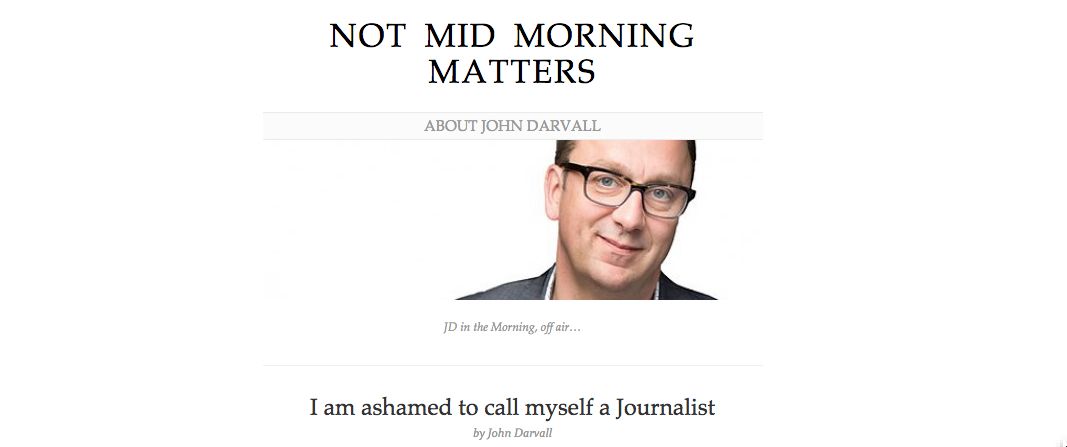
darvall

Then today I read about a journalist saying that he was ashamed to be a journalist. You can read the original article here. I thought it was going to be atonement for things like that. A cry for forgiveness, from a profession that decided that it was ok to write down that the Prime Minister threatened BBC journalists in public that if they didn’t toe the line he’d shut the BBC, but it was only ok to write about it after the election, in case it annoyed the Prime Minister. Or maybe, in case his behaviour was so outrageous that he would have lost the election if people knew that the public service broadcaster had been treated like this.

But I was wrong. John Darvall was outraged because other journalists told the truth. Or if they didn’t he doesn’t say what it was they made-up. His daughter was killed in a car crash. He made up a tribute to her, as anyone might, then attributed it to her mother. Which was not true. She might have thought those things about her daughter. She probably did. But she didn’t say them. John Darvall did. Then he pretended someone else did and wanted other journalists to repeat this fiction. His daughter had lived with her mother and step-father since she was three. His daughter and her mother and John Darvall and the step-father didn’t use that word, but that was the fact of it. Cosy sophistry of the order of “I am Polly and Oliver’s father, Simon is their dad” may be fine around the kitchen table and doubtless it was, but it isn’t all that clear when you’re trying to tie things up in 150 words in the Western Evening Press or wherever.

That may well be “always the language we use,” but it isn’t strictly true. Whoever Simon is, he was the poor girl’s stepfather. He and she may not have thought of him as such, nor used the word, but that is what he was. Language really is vital if as the 1,000 words of self-indulgence claims, “we are to understand who we are and what we do. ”

What ‘we’ chiefly do in this case is get irritated because other journalists tell the truth using a word you don’t approve of and write copy for other papers that you think is badly written. John Darvall repeatedly says that untruths were said, but somehow forgets to mention any of them. Not one, in fact. What gets most attention is that other journalists described his ex’s partner as his daughter’s step-father, which he was. And that the step-father, after he’d heard John Darvall on the phone, rang him up later and gave him a bollocking about what other people said.

I don’t know John Darvall. I don’t know anyone involved in this story. I can fully understand why people lash out and say unreasonable things when they’re upset, especially when they have something as serious as sudden death to be upset about. But being ashamed to be a journalist because other journalists use a factual descriptor and you don’t like it, and your ex’s bloke rings you up and goes on at you isn’t anything to do with anyone else. It’s piggy-backing his own daughter’s death to look right-on.

The gist of the problem, the thing that sticks most in John Darvall’s craw, apparently it is ‘they’ said his ex’s partner was the dead daughter’s step-father. Well, he was. Deal with it. It’s not something to be ashamed of. And it’s not as if journalism needs to look far for things to be ashamed of. There are, after all, more shameful things than using truthful words that people don’t like. Except as the journalists on Cameron’s airplane decided, maybe there aren’t.


Share Button

Hagrid

The word doesn’t mean what you think it does. It’s nothing to do with people who used to do little documentaries about cars and order four racks of lamb in restaurants, then eat it all themselves. Oh because I know, ok? It’s nothing to do with Harry Sodding Potter.

Nothing whatsoever ever to do with at all. Nothing.
Nothing whatsoever ever to do with at all.

It means what it says, which is nothing to do with the cheery, bluff figure in the films. It means ridden by a hag. Which isn’t much fun. I didn’t know until I read up on it how widespread it is. Hag-ridden is a feature of Icelandic literature, although why that should be I don’t understand. It’s a waking dream, a sleep state, a hallucination. A nightmare. And it’s usually utterly terrifying. I had one last night.

The first time was at university. It happened twice within a month or so, both times in the same room. A woman appeared in the corner of my room, near the door, tiny. She grew bigger as she came towards me. I couldn’t move. I wanted to. I wanted not to be there more than I’d wanted almost anything. But I couldn’t move. I couldn’t move as she sat on my chest. I wanted to hurt her, hit her, anything to get her off me because I couldn’t breathe but if I moved I might make her worse and I couldn’t imagine anything worse than her. And most of all, I couldn’t move. I couldn’t twist her off me or raise my arm or cry out. I never can. Then she was gone and I was trying to breath at about double the rate I normally do, pouring sweat, shaking. Terrified. I was nineteen in a hall of residence. I thought it was haunted.

It wasn’t, or perhaps I was. It happened again in another bedroom, then again ten years later. It’s only happened once when another person was there, which is interesting in itself, not least as there is a German tradition that these dreams afflict those who sleep alone. Whether they’re cause or effect is another matter. It isn’t like a dream, where you know it’s a dream. It’s real, or it feels completely real, because the worst thing about it is you feel as if you’re completely awake. Except you can’t move at all. And you can feel the weight of the woman on your bed. On you.

It's not me.
                                                   Apparently it’s not just me.

Last night I dealt with it, but it was different, as different as it could possibly be. I’ve been a bit ill. It’s just flu but it’s been going on for a while and I’ve been working on something I needed to do and got sunk into it probably a little too much and my sleep has been shot to pieces. Maybe that’s part of it.

I got to bed about half-past nine. I put the lights out at eleven. I thought I woke about three. My old cat was there. I stroked him under his chin and rubbed his ears, stroked his back, avoided his tummy because he never, ever liked being stroked there. I think he was very, very ticklish. I knew he was dead, but he was alive. It was so, so good to see him, for both of us. I can’t remember waking up feeling so loved and feeling so loving, bathed in warmth, unconditionally. As I played with him I could feel when she came into the room. I didn’t see her. I thought perhaps one of the other cats might have jumped onto the bed, but all of them were always smaller than my big cat, and he wasn’t as big as her. She was there again and again she grew and got heavier. Then heavier and larger.

The last time it happened I managed, just about managed to remember this was a dream. That it wasn’t real. That even though I couldn’t move, that even though her weight was growing and she was getting bigger and bigger, pushing me into the bed in a way I don’t welcome women grinding me into beds, that even though I was starting to feel I couldn’t breathe, I managed to remember this was just a dream. A horrible, frightening dream, but still a dream I was ultimately in charge of, a dream I could control. Above all, a dream where I could decide if I wanted to be frightened or not. Because it was a dream.

I managed it last night. It is not easy. The fear still comes, especially when you start to feel you can’t breath, the weight is there on the bed, growing and you can see all around you, can see nothing has fallen on you, that it isn’t a heavy book you’ve forgotten you were reading when you went to sleep. But I  woke up still feeling the love of my old cat, who died eight years ago, the glowing warmth and all-enveloping trust and wanting nothing more than just for that moment to go on for ever, the way it never can. As nothing can. Including nightmares.


A note

According to the unimpeachable source which is Wikipedia, the word nightmare derives from mara, a Scandinavian mythological term referring to a spirit sent to torment or suffocate sleepers.

The painting is Fuseli’s The Nightmare. He painted it in 1781 in several different versions, all of which scandalised polite society at a time when The Rivals was as racy as it got. There were engravings of it, cartoons, satires and downright rip-offs of it. It depicts the imagery of the woman’s dream at the same time as the woman herself. I think this is why it was so successful; it plugs straight into the experience itself, a place where there is no border between waking reality and the neverland of dreaming. This is the realm of faery, the disputed territory between our world and another, where each of us wanders alone and unprotected at night.

Share Button

The way we weren’t

I was born if not in a cross-fire hurricane, then certainly not in a Hawker Hurricane either. Although thanks to Airfix kits, I knew enough about them to kid most people along.

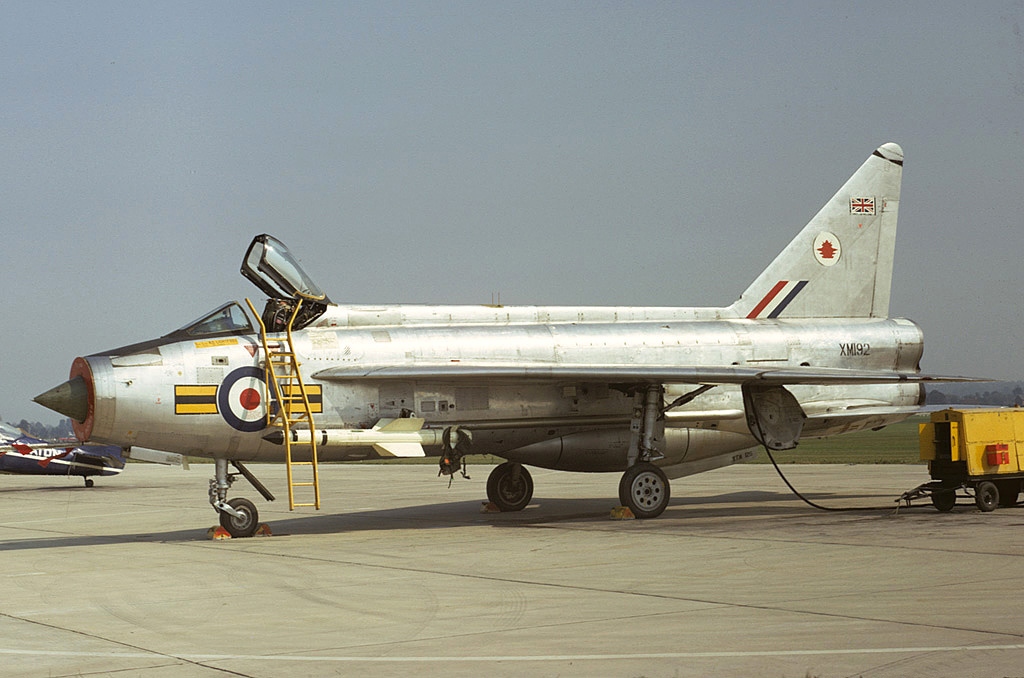
hurricaneFlying, or the idea of it anyway, fascinated me when I was a boy. All this were fields, an’all, but that’s another story as equally true and/or plausible. I was about to say I didn’t get on an aeroplane, as we called them in my house, until I was nineteen, but it wouldn’t be true. Somewhere there’s a picture of me aged about four, wearing a tweed coat (oh because people did in those days, all right?) and somewhat improbably, a modern pilot’s helmet, sitting in the front seat of an English Electric Lighting. One of the only things I share with Jeremy Clarkson is a admiration for the Lightning.  Someone I used to know got a ride in a Russian Foxbat about twelve years ago. She said it wasn’t like flying. Not like flying out of Heathrow or Gatwick, anyway. She said it got off the ground, got to the end of the runway then sat back on its haunches and went straight up. The same as the Lightning was designed to do, get to 36,000 feet in three minutes in 1959. It topped-out at 87,000 feet, deep into the edge of space. Think about that for a moment.

I've sat in one of these. Straight up. Although not to 87,000 feet.
I’ve sat in one of these. Straight up. Although not to 87,000 feet.

Obviously the RAF scrapped the Lightning and bought American Phantoms, which above all else, were American. The idea of an independent defence capability was a joke even then, before anyone even mentioned Trident. Aged four, I didn’t know any of this. I just loved aeroplanes.

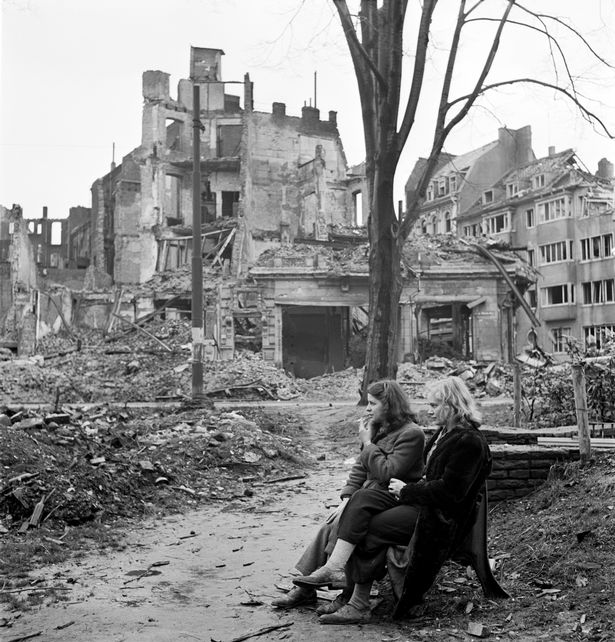
Maybe it was my father. As a professional liar he’d claimed he’d been a pilot when it turned out that in fact, he’d been the bloke who put air in the tyres and started the engines up. He watched black and white documentaries in the middle of the night. Once he got me out of bed to make me watch something about the Blitz. Forty thousand British people died from bombing in World War Two. About the same number of Germans died in three days in Hamburg and Dresden, but nobody even mentioned that, then.

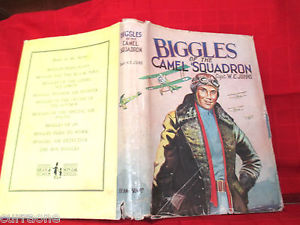
Where is this going? I wish I knew. Tangentially around a picture I bought in Bath a couple of weekends ago. It spoke to me of my childhood, or my early teens anyway, when I discovered Captain W.E. Johns and his heroic creation, Biggles. I read them obsessively, especially the First World War stories. They had something about them I’d never read before; it was years before I knew why they were so powerful.

biggles

Firstly, although obviously any mortal man having as many adventures as Biggles would have been dead before he’d done half of them or even a quarter, Johns had been a fighter pilot himself, in France. He knew what he was writing about. This Biggles drank, got in fights with other pilots, loved, shot and killed people, crashed, got cold, got tired and displayed what now are so very obviously classic PTSD symptoms. Only later when the magazine articles had proved wildly popular Biggles’ diction changed and he switched from Scotch to lemonade at the insistence of John’s publishers and agents, to widen the market to schoolboys.

But Biggles of the Camel Squadron and Biggles of 266 are the original, first attempts. And while they’re polished, perfect little short stories with a beginning, a middle and an end, they’re also very raw. When pilots die in these stories, there’s no doubt but that they’re dead and little or no talk of glory or a purpose in their deaths. I’d never, ever read about a man crying when another man had been killed before; to this day it surprises me that the first place I read this was in a Biggles book. The shock was real; I didn’t know men did this.

I didn’t know men wrote about it either. It was a different world, a long way from my father’s fantasies of flight, a long way from the Wiltshire village I grew up in. But then as now, the past is a different country. They do things differently there.

Koln 1945

Share Button

China in my hands

Dear Chinese people,

Even  though it’s written in English, even though most of you won’t be able to read it, please read this open letter to you all.

I know you don’t give a stuff about human rights or copyright protection or executing people for looking funny at Chairman Mao’s poster. I know you don’t give a stuff about child labour or employee safety or seemingly anything much at all, except having everything every which way in your Communist-controlled capitalist exemplar of a state. I blame Nixon, personally. He was the man who transformed China from where? to the country that bankrolls the West and fills its shops with the plastic tat that passes for the good life, notwithstanding that the West gave it the money to do that in the first place.

But that’s not my letter. My letter is really, really short. Just four words, really.

What do you want?

That’s it. It’s really easy. Well, it probably is for you, but I’d dearly like to know the answer. You see, this blog, if that’s what it is, sort of gets an ok-ish number of visits. For what it is, at least. But half of them are from you. In China. And I don’t understand that.

It makes no sense.
It makes no sense.


Every time I post anything, within seconds, half the views are from China. What is it about my stuff? I mean, I don’t even write anything about China. Germany, yes. Mythic Britain, quite a lot, as in the Britain in my head. France a bit. America sometimes. China not at all.

I would say you’re very welcome, but you’re actually not. I don’t know anyone in China. I went to Hong Kong once, for three days thirteen years ago and memorable as I am, I don’t think anyone in the Mandarin Orient got so fond of me they follow my blog, honestly. So it’s spyware of some kind. Something automatic. Not a real person. Watching my posts. For what? For something it can use, is the obvious, the only plausible answer. So if it’s all the same to you, please don’t. Stealing is bad manners where I come from.


Share Button

When I was dying

It’s ok, I’m not any more. It’s just a cold. But the not-all-thereness, the distanced wooliness, the feeling that I-could-physically-but-I’m-just-so-very-tired, the feeling of slowly leaving something I’ve got now that I’ve got what is obvious even to me is nothing more than a cold and a slew of self-manufactured neuro-toxins sloshing around inside me as my body tries to find somewhere to put the dead cells that fell in the Great War against some crappy cold virus.

I get about one cold a year these days. I used to get them a lot when I was a kid. I used to ask myself what the point of cold viruses was, wondering if I died the virus would die and so wondering what the point of it was. Luckily for my first foray into existentialism I didn’t know the cold virus would probably be fine thanks, longer than my cooling corpse would, anyway. I’m not sure these colds weren’t something else, some manifestation of needing to be noticed, but whatever they were, that wet-hankied, sore-nosed, always cold condensation-on-the-car-windows in a grey West Country car park while the wind sheared through my rubbish Co-op parka if I stepped outside is one of the primary memories of my childhood. I don’t miss not having colds at all. I don’t much miss being a kid, either.

I got this one because I was over-tired and in the company of people who didn’t know what a handkerchief was. All day one day I had pains all the way up the back of my legs, into my waist, for no reason I could work out. Now just the remains of the cough, the watering eyes and the terrible distance between me and everything else.

It was like that when I was dying. I don’t know when it started. In the womb, maybe, or at least the stage was set there, as it always is. My iliac vein curled around my femoral artery, in front of my spine before I was born. When I went on long-distance airplanes, as I did from the age of nineteen, and again when I was twenty-four, then again, then now and again on holidays, then a lot in my early forties, the air pressure allowed the artery to expand to about five times its normal size. I know. I can make it do it. I’ve watched it on a monitor in the ultimate real-time bio-feedback experiment my surgeon made me do.

The vein was clamped against my spine and because blood clots when it isn’t flowing, that’s what happened. I had at least five deep-vein thromboses, or possibly three Guinness Book of Records ones. Nobody is really sure, nor when exactly they happened. All but the first were preventable. The fact that they took four years off my life, drudging through at a distance, the colours of everything fading, feeling that I was slowly dying for the simple reason that I was, was entirely down to my local doctor’s surgery.

My GP had no idea what was wrong with me. He, then she, then he again tried to find DVT by feeling my leg, found nothing and concluded there was nothing wrong with me. Most of the time there wasn’t. I was cold almost all the time even in summer and I didn’t want to move much. I bought a bicycle and enjoyed going out in the lanes after work, but after the first winter it wasn’t much fun.  I found myself one December in a soaking, freezing field I couldn’t find my way out of, my feet soaked, my leg aching in a way I couldn’t understand and no hope of ever being anywhere else but cold and hurting under a grey sky. Occasionally I’d simply double up with pain, dropped to my knees vomiting. I vomited unpredictably, on three continents, leaving a sour trail of hopelessness wherever my ticket took me. Ten minutes later there would be no pain at all. I wondered if I was losing my mind. There were no lumps, no skin discolouration, nothing. I was just dying.

I’d had a relationship go wrong in a way that was entirely predictable it would. I thought I was just sad about that and this was what it was like getting older. You move about less. You feel the cold. Everybody in my family did.

From here, everything about this screams how obvious it was what was wrong with me. My childhood memories are full of blocky men in armchairs who it hurt to move, coal-fires blazing in mid-summer, living-rooms heated almost to suffocation-point. Every one of them I think now had exactly the same thing I did, iliac DVT, congenitally. They all wore fixed smiles. They dealt with it differently to me.

I didn’t die, no thanks to my local doctor (and Leiston Surgery, please feel free to take a bow at any time). But it was odd and interesting to hear a friend use exactly the same phrase about the time she had pneumonia and thought she had something else: “When I was dying….”

We neither of us said it for sympathy or a hug or maybe, if nobody minds, you know, something else maybe. Just a fact, along with the odd realisation that this was real, that we had both had the same experience, that we’d both known what was going to happen and the fact that it didn’t wasn’t really much to do with us at all. But when we were dying somehow we didn’t. Something slipped away, but it wasn’t us. Some time again it would be, we both knew that. But not yet awhile. Not yet. It’s just a cold, this time.


Share Button

Repurposing

I’m doing some new things recently. New to me, anyway. But one of the things I’m doing I’ve done before and it still gladdens me every time I do it.

That Haile Sellassie lived here, you know.

Bath on a Saturday morning, Walcot Street in the mist rising off the river flowing alongside it. OK, it’s changed. There are no coke stoves or dogs on a piece of strong, nobody claiming to be a carpenter because he can join two bits of ply at right angles (but interestingly, according to a conversation I overheard at the flea market, still not-really-antiques that can be spotted by the injudicious use of Posidrive screws). No Hat and Feathers, no Mad Carol, no Lucy in a jumpsuit, no car radios unexpectedly for sale, nor smoke billowing out of them when the vendor wired them up backwards on a 12 volt car battery or a whole host of other things that used to be. Luckily, no-one lighting a fire to keep themselves warm in the car park now where the cattle market used to be, either.

The past is another country. They do things differently there. But where would places like Bath be if they forgot their past? As the song from Whatever Happened To The Likely Lads told us, it’s the only thing to look forward to.

But some of it’s still there. I was there this Saturday. I was going to climb Beechen Cliff, but the mist was still down and there was no point, so I walked up past the Abbey. The first thing I saw was a 1930s print, some Boy’s Own illustrated tale of pilots, back in the days when aeroplanes were called that and had four wings and two propellers, when bounders wore bow ties and only sailors wore beards. £10 well-spent. I had promised myself I wasn’t buying anything, but then I remembered the time in Oxford on another Saturday morning when for another £10 I turned down the chance of buying what I’m pretty sure was an original artwork that illustrated a Biggles book. A chat and a little recollection of old times with the woman in a fur coat on the stall that chilly morning, two steps away from a jumper exactly like the one I’d had in mind and thought was going to be about £200 so I wasn’t having that this winter. Except someone else had worn it, apparently for about ten minutes, so that saved £190.

Just around the corner, back up on the street and I found a kettle. I’m not really a copper kettle sort of person, but I have this boat. OK, it isn’t in the water and the chances of it getting in the water look slimmer each week this year, but I can still go and sit inside it and drink tea. Or at least I could if I had a kettle. But I don’t want to get Alzheimer’s from some horrible aluminium thing and I don’t want a shiny brand new piece of German design (well ok, I do, a lot, but it wouldn’t look right on the boat) so I was stuck. Until I went into the charity shop and found it.

IMG_3141
As it was. I think it’s 1950s.

A couple of minutes with some Brasso and rubber gloves and it polished up a treat and no error gorblimey guvnor. It looks great and fits right into the wooden boat vibe that goes on in a wooden boat, surprisingly.

A print, a jumper and a nice kettle, all for £30. But more than that, being part of it again, Bath on an autumn Saturday morning.

IMG_3142
Not long after. It’ll do, I think.

Those who’ve read this stuff before will know I went to university here. I grew up  here (discuss, with reference to some laughably inappropriate partner choices which would have been more laughable if they’d happened to somebody else, I think), or at least, twelve miles away. When I was about eight my father used to take me to Bath early on Saturday mornings. I was so excited about this I used to try to sleep in my clothes because I had to get up so early. It never worked – I could never sleep like that. But we still went to Bath. The market I sat in is still there. I bought some cheese there this time, rather more than half my life away. I wrote a poem I was going to call that, but it got called something else instead. Wrongly, I think now. And there, as some people know, lies another tale, from and for another time.

Share Button
Follow on Feedly